
Highway Caps: Visions for a Reconnected Chicago

By: Hugo Coronado
October 19, 2026 / Blogs
October 19, 2026 / Blogs
Reflections on the Horizon Lines Competition and the Possibilities Ahead
Metropolitan Planning Council (MPC) was honored to be selected as a top finalist in the World Business Chicago Horizon Lines Competition, which challenged participants to envision a transformative future for Chicago in 2050.
For MPC, positioning one idea as Chicago’s next big opportunity. There are many infrastructure investments and policy changes we hope to see transform our region in the coming decades. However, one idea stood out because of the work we have already done to elevate it throughout the region: highway caps.
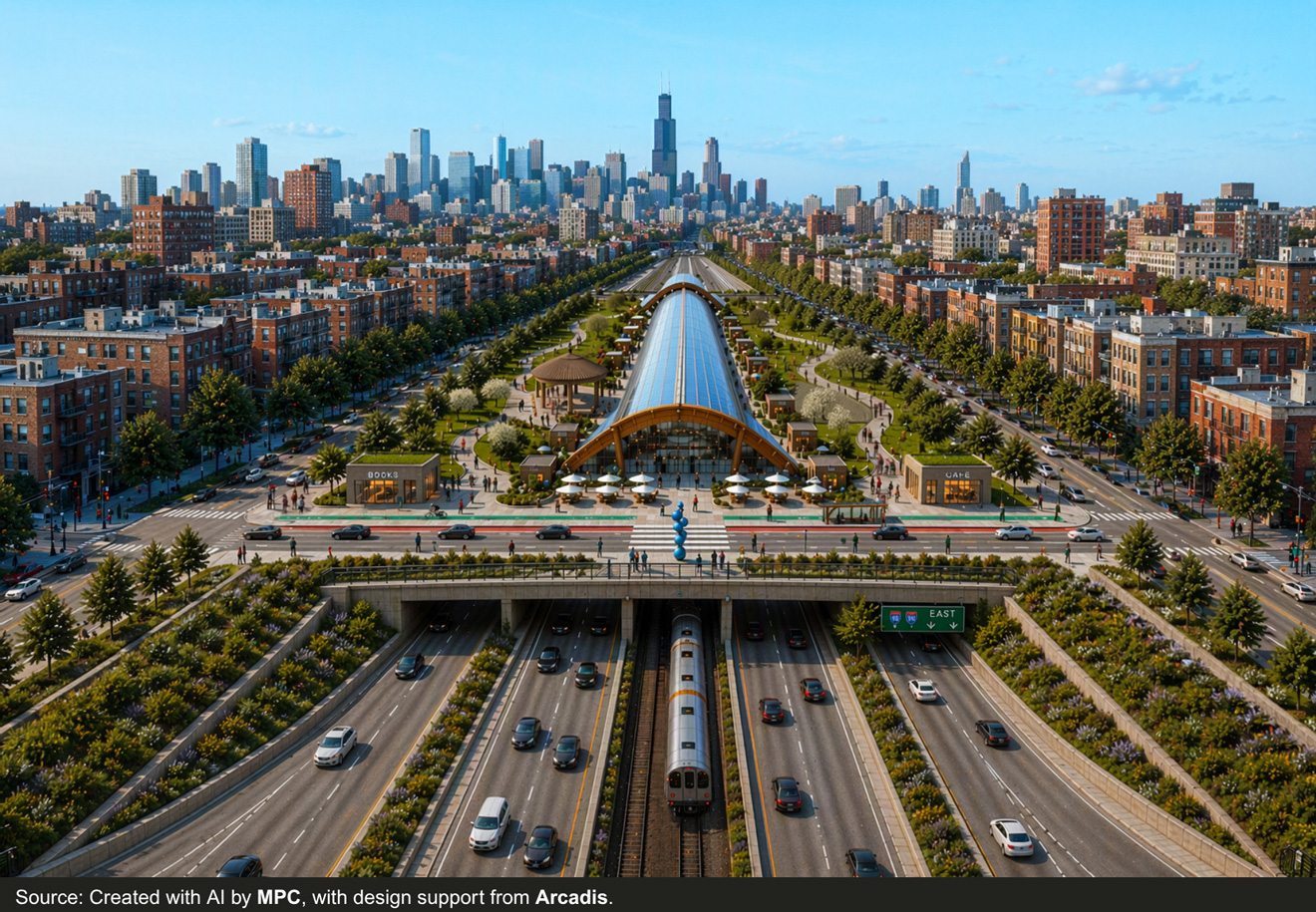
A Vision Rooted in Community Conversations
The idea of strategically placed highway caps in Chicago resurfaced in 2022 when MPC conducted community engagement across the region for our Reconnecting Communities project. The engagement collected input from residents and identified projects that could overcome or mitigate the barriers created by our highway infrastructure. This effort was designed to help align regional priorities for the federal Reconnecting Communities discretionary grant program established and implemented under President Biden.
Throughout those conversations, two corridors repeatedly emerged as significant barriers to connectivity: the Eisenhower Expressway (I-290) and the Dan Ryan Expressway (I-90/94). Residents and stakeholders also pointed to highway caps as an innovative solution capable of reconnecting neighborhoods, improving mobility, and creating new public spaces.
The City of Chicago successfully secured federal funding for a broader planning process for a vision for corridor improvements that is ongoing. A small highway cap proposed near Independence Boulevard was initially funded but those funds were ultimately rescinded due to policy shifts at the federal level. Four years later, we still have not seen a comprehensive vision for the potential of I-290 as a truly multimodal transportation corridor.
Imagining a Reconnected Eisenhower Corridor
As our aging infrastructure nears the end of its useful life, the need for reconstruction presents a once-in-a-generation opportunity. These investments will impact our communities for decades, and we believe they should do more than replace what exists today. Highway caps offer a transformative approach to infrastructure renewal, helping to reconnect neighborhoods, improve public spaces, and mitigate, or even repair, the harms caused by past highway construction.
The Horizon Lines Competition presented an opportunity to advance this conversation. In fact, highway caps emerged as a popular concept among Horizon Lines entries, with five proposals incorporating them across several major expressways. Three notable examples included the Spine proposal along the Dan Ryan Expressway and the Prairie Quilt and Kennedy District proposals along the Kennedy Expressway in downtown Chicago.
Our proposal, which started as a broad vision of major highway caps on the Eisenhower and the Dan Ryan, ended up envisioning the Eisenhower corridor through a multimodal lens, with one or more highway caps. We believe that strategically located highway caps can:
- Improve the transit rider experience by lifting up Blue Line transit stations above the cap, increasing space for improved station access.
- Reconnect neighborhoods that have been divided by highways for decades.
- Create new land dedicated to parks, open spaces, and community amenities.
- Transform Blue Line stations along the Forest Park Branch into vibrant destinations that support local businesses, cultural programming, and community-led initiatives on new land created by a highway cap.
- Strengthen connections across the highway for pedestrians, cyclists, and transit users, and those using other forms of sustainable mobility.
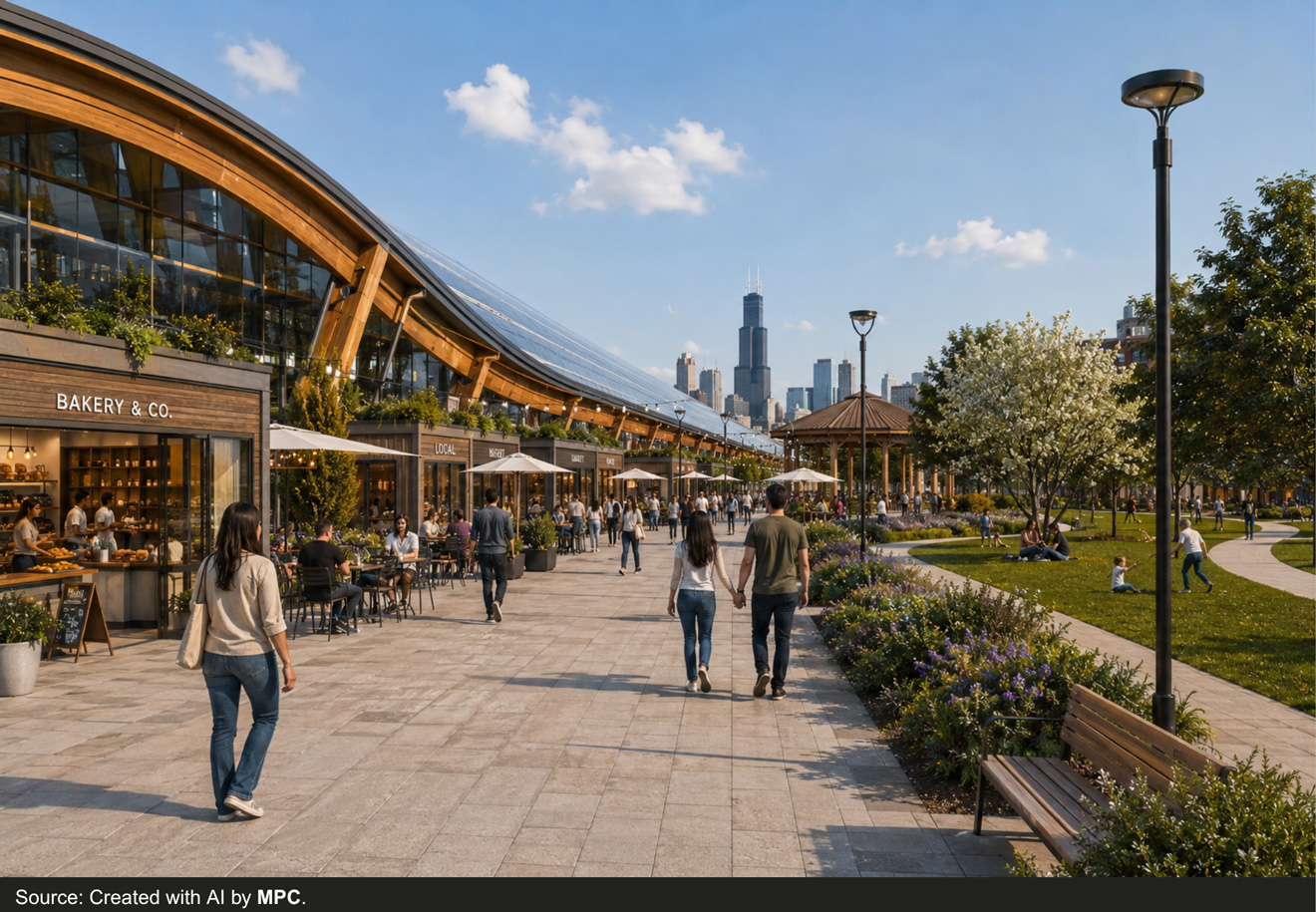
The vision is ambitious, particularly given the number of agencies involved along I-290, including the Illinois Department of Transportation (IDOT), the Chicago Transit Authority (CTA), and the Chicago Department of Transportation (CDOT). However, examples from across the country demonstrate that these projects are not only possible, but can generate significant economic, social, and environmental benefits.
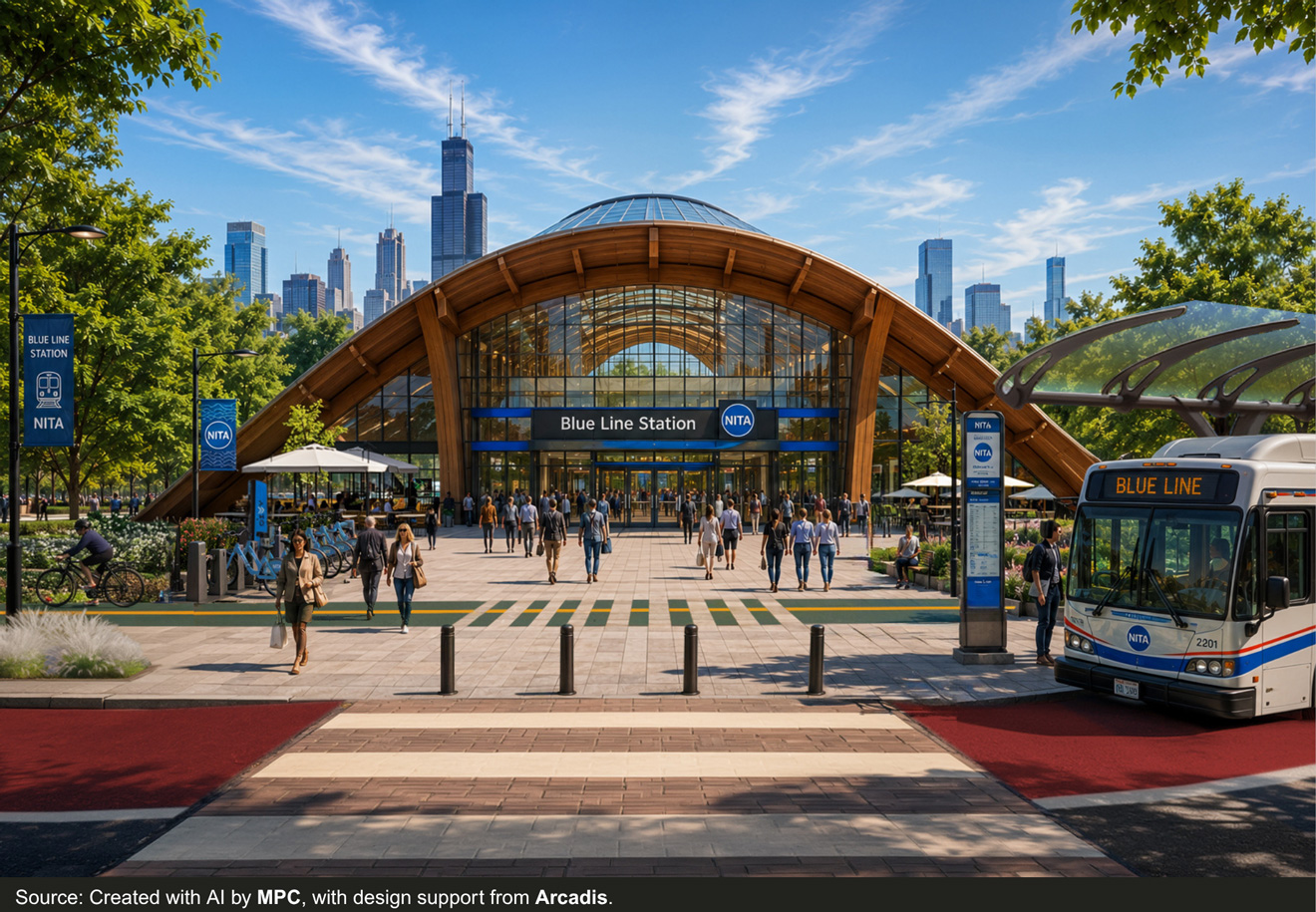
Learning from National Examples
Cities such as Dallas and Cincinnati are successfully implementing highway cap projects by establishing strong partnerships among transportation agencies, local governments, philanthropic organizations, and community stakeholders.
Based on lessons learned from these cities, MPC recommends a four-part governance framework for future highway cap projects in Chicago:
- IDOT-Led Infrastructure Partnership
IDOT would maintain responsibility for the highway infrastructure itself, including engineering, structural integrity, and operational requirements, while establishing an intergovernmental agreement with local agencies for long term maintenance. - Municipal Ownership of Surface Amenities
The City of Chicago and/or the Chicago Park District would own and manage the parks, plazas, and public amenities located on top of the caps. - Transit Agency Participation
CTA would play a critical role in integrating stations, improving accessibility, and coordinating transit-oriented investments adjacent to capped segments. - Conservancy or Foundation Partnership
A dedicated conservancy, foundation, or nonprofit entity could support fundraising, sponsorships, programming, events, stewardship, and long-term maintenance. This model has proven successful in Dallas, where philanthropic partners continue to play an important role in sustaining multiple cap projects.
Funding the Vision
Implementing highway caps will require a diversified funding strategy. Federal discretionary grant programs remain a critical opportunity, particularly those supporting major infrastructure investments, state of good repair initiatives, multimodal transportation improvements, and climate resilience projects.
State and local funding sources will also be essential. Chicago should explore opportunities to leverage future development by establishing Tax Increment Financing (TIF) districts that can help support construction costs and related public improvements. In addition, foundations and private-sector partners can play an important role in closing funding gaps, supporting public programming, and contributing to long-term operations and maintenance.
By combining public investment with philanthropic support and community partnerships, Chicago can create a sustainable framework for both the implementation and long-term stewardship of highway cap projects.
Looking Forward
Highway caps are not a short-term solution; they are long-term investments in connectivity, equity, and quality of life. Advancing these projects will require continued advocacy, collaboration, and leadership from agencies at every level of government.
The upcoming reconstruction of the Eisenhower Expressway, combined with ongoing planning efforts related to the Reconnecting the West Side Initiative lead by CDOT, which MPC has participated in, presents a once-in-a-generation opportunity. Now is the time to identify priority locations, engage communities in shaping a shared vision, and establish the governance structures needed to bring these projects to life.
Chicago has the opportunity to transform one of its most significant transportation corridors into a national model of multimodal connectivity and neighborhood reconnection. Achieving that vision will require leadership from state and local partners, but the potential benefits for residents, transit riders, and communities across the city make the effort well worth pursuing.
What’s next on the horizon
The Horizon Lines Competition challenged us to think boldly about Chicago’s future. Our proposal for highway caps is more than a conceptual exercise – it is a practical vision grounded in community input, national best practices, and a belief that transportation infrastructure should connect people rather than divide them.
As Chicago plans for the decades ahead, highway caps offer a powerful opportunity to heal historic divisions, create vibrant public spaces, and build a more connected and equitable city for future generations.