
In the Current: The Wild Mile (Reach 2)
By: Rachel Gaunce

By: Morgan Murphy
November 4, 2026 / Research
November 4, 2026 / Research
A case study on innovation and connection
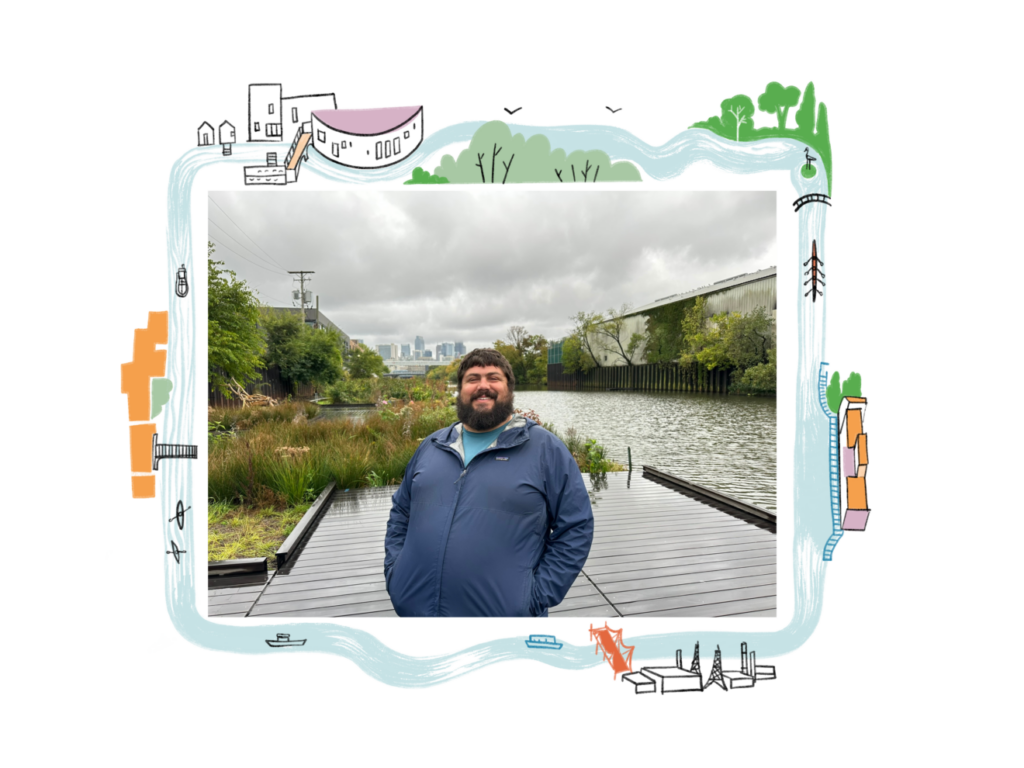
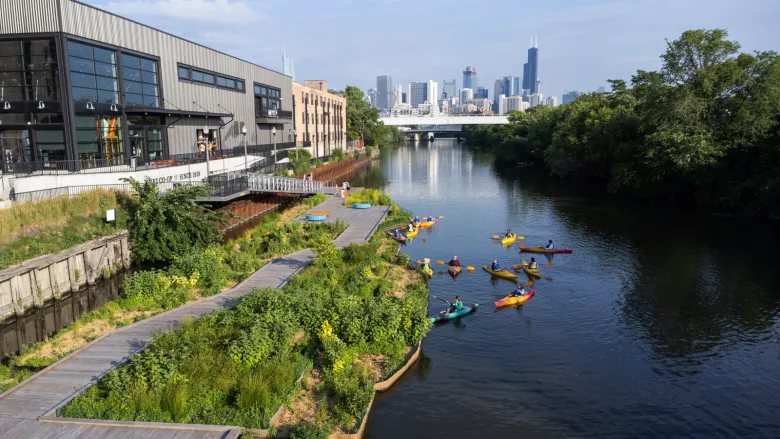
On a drizzly morning in October, MPC staff Rachel Gaunce and Morgan Murphy took public transit to the Wild Mile and got to know Phil Nicodemus (Research Director, Urban Rivers – pictured left) over a tour of the site and conversation in the nearby Urban Rivers office. The conversation explored the past, present, and future of the North Branch/Goose Island (Reach 2) area and offers perspective on the critical role of innovation and access in this unique geography.
Phil explained that Urban Rivers is a nonprofit based in Chicago whose flagship project is the Wild Mile (a growing stretch of walkable, floating wetlands). Urban Rivers seeks to, “reconnect these urbanized waterways with nature and communities because this is a very typical situation throughout most urban environments… to have this old, very commercialized, very industrialized waterway that has fallen into neglect and disrepair, which has a lot of legacy pollution issues, and also continues to suffer from a lack of positive perception, understanding, and access.” When complete, the Wild Mile will incorporate constructed floating wetlands, more natural shorelines, public walkways, and recreational canoe/kayak docks along the river in order to both address the river’s challenges and model a future for other stretches of the river.
Since its founding, Urban Rivers has been a leader in leveraging innovation to restore ecology, changing public perception, expanding general understanding, and widening access to the river through their programming, which includes the public Wild Mile eco-park, various volunteer opportunities, field trips, and free community events, like kayak days led by staff. The perspective that guides their work is to restore urban rivers by putting wildlife first and then reconnecting people to healthy waterways – especially in communities that have been historically marginalized. Their ultimate goal: make the river ecosystem and public access a standard priority in new development that fosters long-term environmental stewardship.
When reflecting on the main changes of the reach from the past to present, Phil focused on both the water quality and persisting challenges related to access. He shared, “the river is so much cleaner than it ever was. It’s this massive victory in infrastructure investment and cleaning up the water, and almost no one gets to understand that because there’s no way to connect with the river. The only places you can really do it easily are downtown, and a couple other select developments.”
To help address this historic lack of river access, Urban Rivers hosts dozens of public events and workshops, and hosts hundreds of students every year. Activities include nature journaling, collecting trash, planting various species, bird watching, and looking at specimens under a microscope.
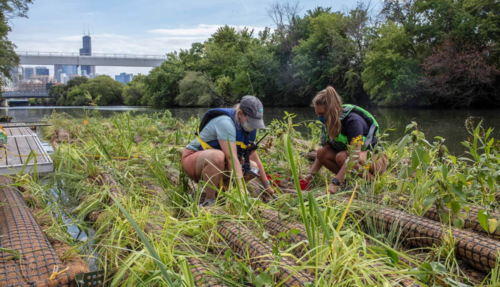
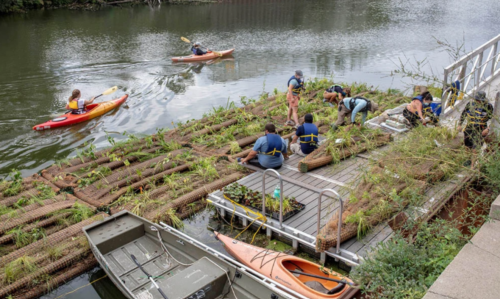
Photo credit (above): Shedd Aquarium/Brenna Hernandez
Photo credit (left): Forest Preserve District of DuPage County
Phil showcased the newest extension of the Wild Mile, which was completed in 2024. He shared about the exciting fresh water mussels restoration that Urban Rivers has been leading with the support of the Forest Preserve District’s Urban Stream Research Center (one of the few facilities in the country propagating freshwater mussels). The DuPage County Forest Preserve District supported the initiative by giving freshwater mussels to Urban Rivers for use on a man-made habitat like the Wild Mile framework allows. These creatures require this type of platform to thrive, since the river floor is currently not healthy enough for the mussels. Each mussel filters around 10 gallons of water per day, improving the health of the water and river ecosystem – one mussel, and one day, at a time. In a broader sense, these mussels serve as a symbol of what the Wild Mile does for the river: cleanse, improve, sustain, and serve as a connection point between residents and river restoration as both an act and an impact.
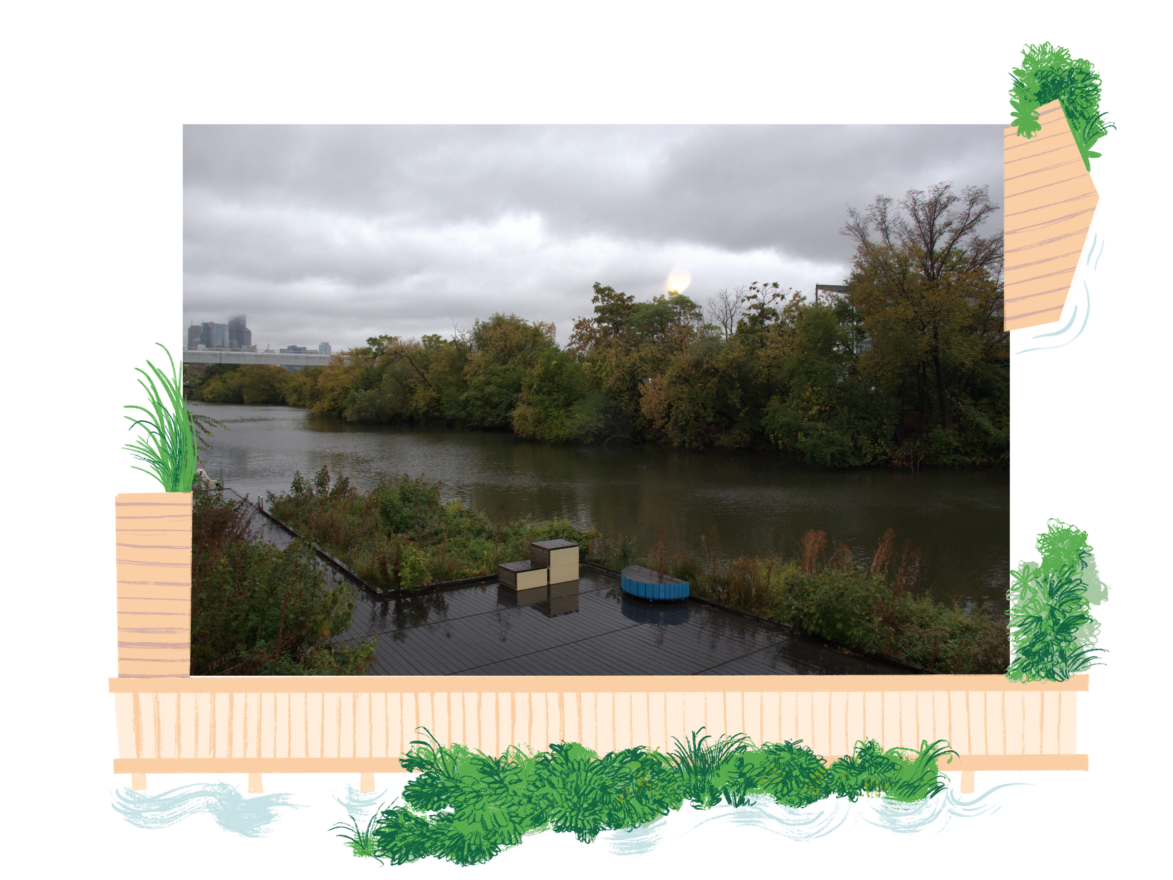
When asked to reflect on what the perfect future for this reach would be, Phil smiled and responded, “I would love to see 100 foot [setbacks] (30 feet is the river setback now)…and any property that becomes unviable because it doesn’t have enough space after 100 feet would be something that becomes a park or part of open space”. He expanded the idea from there by adding, “I think you remove all the barriers up and down and have this kind of well-connected riverfront tissue that weaves its way seamlessly and connects as many parks as you can that are alongside, giving the river more space to breathe…I think about [the river] as something that is naturally ebbing and flowing and flooding and receding, and to try to recreate as much of that as possible.”
To get there, we’re going to need everyone involved. From local volunteers to share about the river, to organizations helping steward the land in ecologically sound ways, to elected officials who support setting standards for future development. In the conversation with Phil, it became clear that developers are more inclined to re-wild or ecologically restore their riverfront access points if there is public will for restoration or if there are incentives or consequences to persuade them to do so.
Since the Wild Mile gets people close to the river, helps them see first-hand that the water is clean, and supports them experiencing the thriving ecosystems, this type of project also serves a critical purpose in wider river advocacy. This goes beyond public perception of the river itself and can lead to increased trust in public institutions more generally. Phil candidly shared, “the floating islands are important because it gives you an opportunity to say ‘oh look at all the stuff that’s really healthy and alive here, and my tax dollars have gone to make [the river] not a horrible cesspool anymore”.
He also focused on the role of everyday people and the importance of perception of the river in order to support it in the future. He stated, “one of the goals of the Wild Mile and Urban Rivers is that any time a new proposal comes up, or a new property is being developed, there’s an understanding that the river is paramount in people’s minds. Then it’s a lot more likely that it gets invested in in the first place.”
The first-hand connection in one instance, like someone experiencing the Wild Mile, goes beyond just that instance, as well, Phil argues. He shared, “Bringing people who are in the city and disconnected from nature…[makes it] so that they want to then go preserve other places. Then they have a healthy relationship with nature and they want to protect things that aren’t even in their backyard because they think about herons and turtles when they think about a new development.”
The North Branch / Wild Mile demonstrates that innovation like a strategic floating eco-park can have impacts beyond the restoration of land or water. It can foster deep connections between residents and the local ecosystem, Chicagoans and trust in local government, and energy for future interventions that improve our urban landscape.
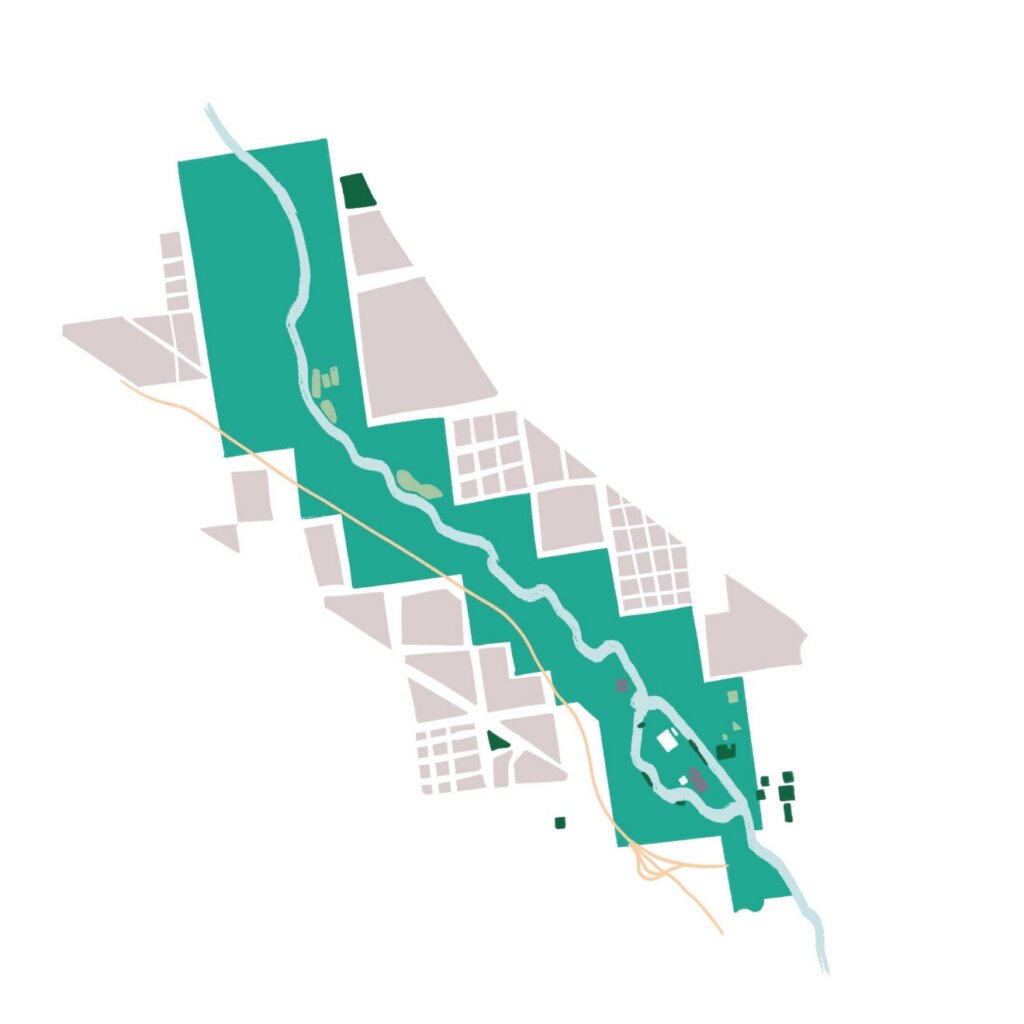
Reach 2 (North Branch / Goose Island)
Above is one story of transformation in the Chicago River System, specifically for Reach 2 (North Branch / Goose Island). Want to learn more about this area or the Chicago River System as a whole? Explore the data here.
Explore MPC research and case studies from the other reaches in the Chicago River System below.