
In the Current: The Riverwalk (Reach 3)

By: Rachel Gaunce

By: Morgan Murphy
November 3, 2026 / Research
November 3, 2026 / Research
A case study on design evolution
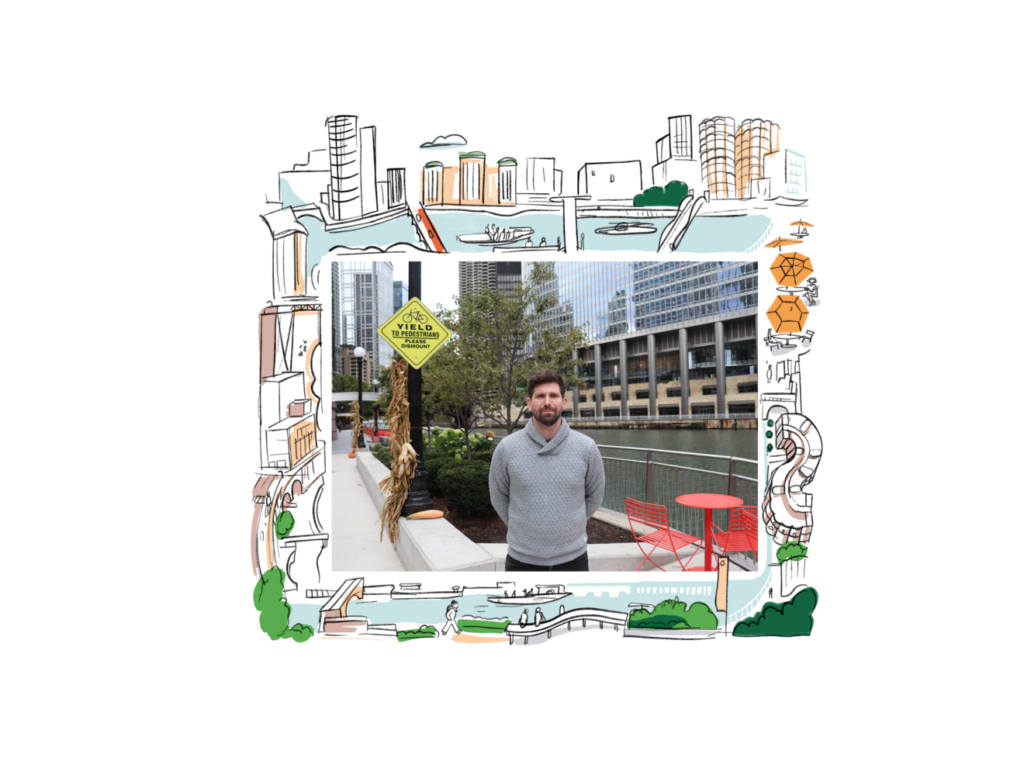
Josh Coles (Museum Director of the McCormick Bridgehouse and Chicago River Museum at Friends of the Chicago River – pictured left) hosted MPC Associate Rachel Gaunce and Director Morgan Murphy at the Bridgehouse Museum for a conversation about one of Chicago’s most iconic destinations for residents and tourists alike: the Chicago Riverwalk. Located in the Main Stem, the Riverwalk is a prime example of how, why, and for who the river system at-large has transformed over time. This project reveals the resilience of our ecosystem, the power of public interest, the need for collaborative decision-making and resourcing, and the role of data to inform the river’s past, present, and future.
As people moved steadily along the river’s edge, including tourists, office workers, joggers, bikers, and families, it was immediately clear that the Riverwalk is no longer just an amenity. It is a central thread in downtown Chicago’s public life. But as Josh explained, this transformation has happened in phases, each reflecting a different moment in how the city understood and valued the river.
Josh weighed in, “The first [phase] was completed in 2008, from Lake Shore Drive to Michigan Avenue”. “The second was constructed from 2008 to 2015 and goes from Michigan Ave. to Wolf Point… so Wolf Point is the end of the Riverwalk.” There are plans to extend the Riverwalk even further, eventually connecting it to Ping Tom Park (add link to case study) to expand its reach beyond the downtown core.
To understand the significance of the Riverwalk today, it’s important to recognize how recently the river was viewed (very) differently and what inspired the changes. Just a few decades ago, the Chicago River was not considered an asset. “Thirty years ago, people didn’t want to be near the river,” Josh explained. “It was stinky, and a lot of it was fenced off.” While there were some boat tours, interaction with the river was limited, and for most people, it was not a place to seek out or spend time. This perception shaped development patterns, as well. Buildings were often designed with their backs to the river, and there was little consideration for public access, ecological health, or long-term stewardship.
That began to change through a combination of advocacy, policy, and design since the 1970s. Organizations like Friends of the Chicago River and MPC, community advocates, and public agencies, helped push for stronger protections and clearer expectations for riverfront development. Today, the Chicago River Design Guidelines (updated in 2019) require setbacks, public access, and the inclusion of green space and native plantings, which can ensure that new development contributes to, rather than detracts from, the river’s health.
As Josh put it, “It’s good to have in place things like the river edge guidelines because as the Chicago River becomes more and more clean, you need things in place that are ahead of where we know the river is going to be.” With increasing interest in riverfront property, these policies play a critical role in holding developers accountable and protecting the river as a shared resource.
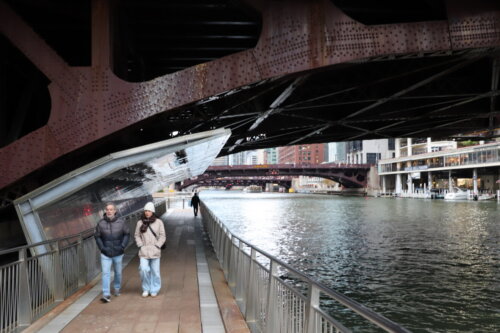
Walking west along the Riverwalk, the evolution of riverfront design becomes visible in real time. Earlier sections are defined by vertical concrete walls, which are edges that provide clear views and access for people, but little ecological value. “The first phase… has 4–8 feet of concrete wall that goes straight into the water,” Josh noted. “Which is nice for people to see the river, but not great for wildlife”.
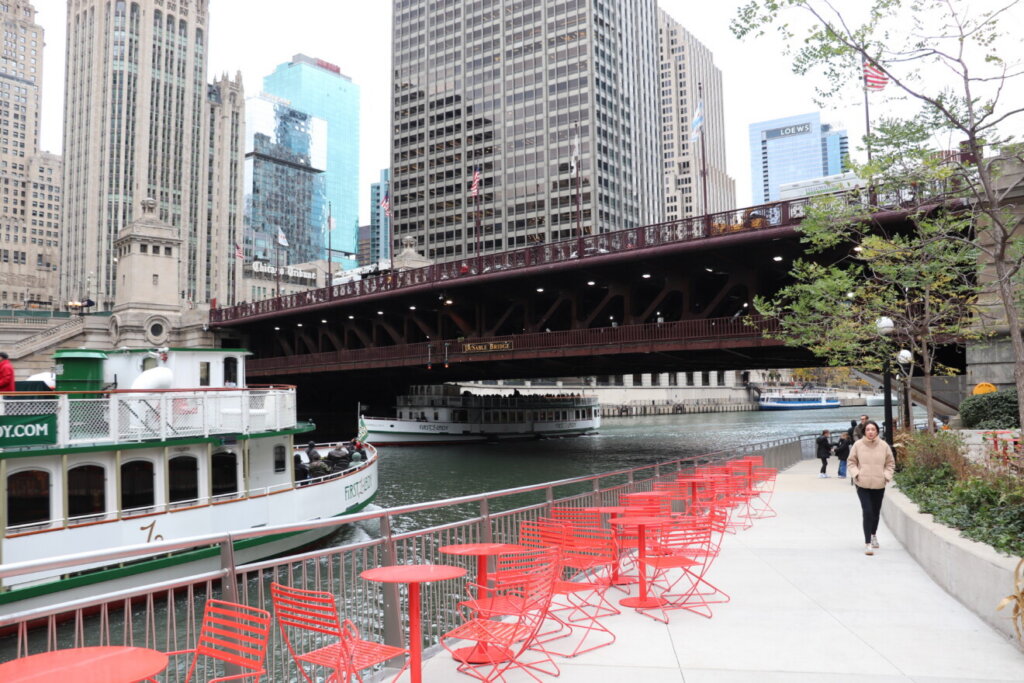
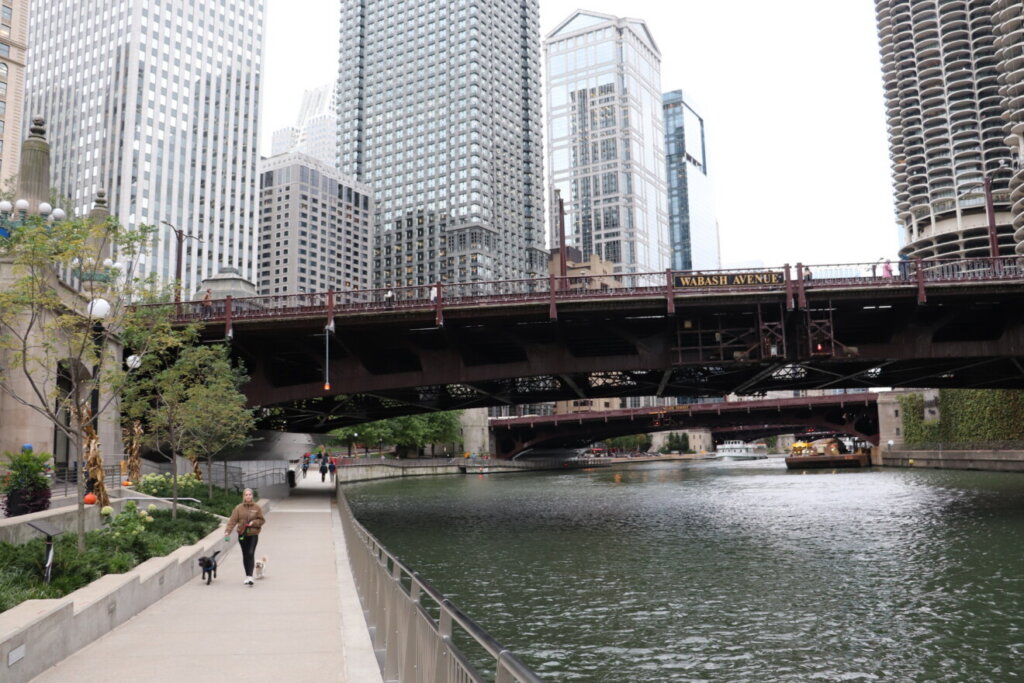
As the Riverwalk approaches Wolf Point, the design begins to shift. Edges slope more gradually toward the water, native plantings appear, and the infrastructure’s materials soften. These newer sections reflect a growing emphasis on ecological integration within urban design. “As you get closer to Wolf Point, the edge slopes closer and closer to the water, which is great for wildlife,” Josh explained. “So you can see how the thought process for development has changed over time.”
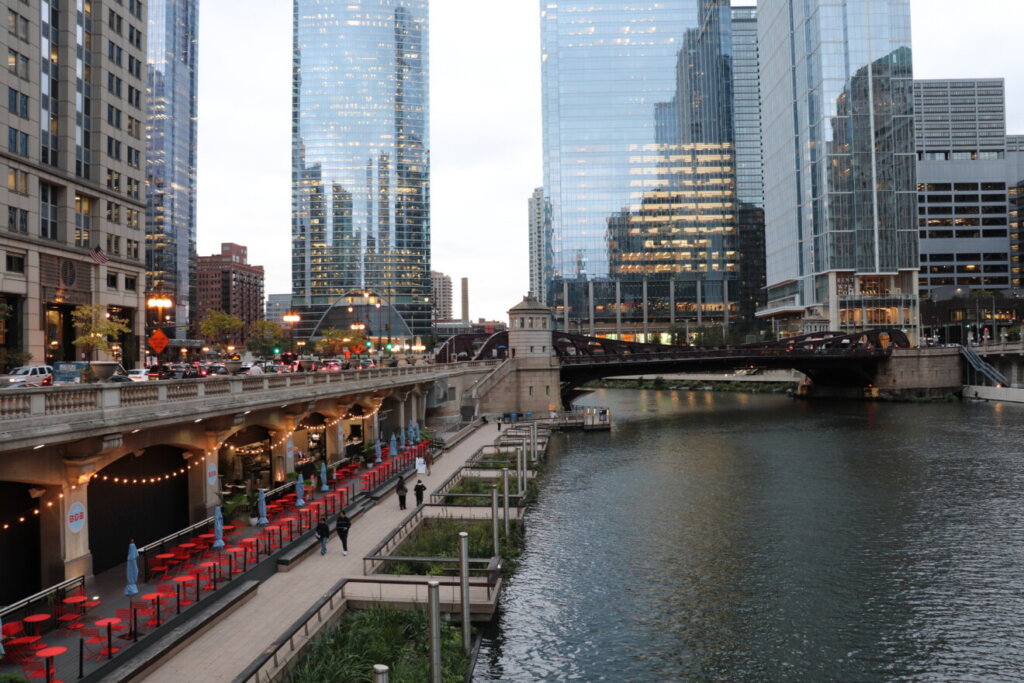
That shift reflects a broader change in priorities. “Maybe 20 years ago, there was less concern – that wildlife was thought of – when it comes to developments like a riverwalk,” he said. “But as we get closer to modern day, things have evolved in the sense that we want to make sure the Riverwalk is part of the water” and not just a pathway for residents to get from point A to point B.
Today, the Riverwalk (and the Chicago River more broadly) tells an inspiring story. Improvements in water quality, habitat, and access have led to a noticeable increase in biodiversity and public use. “We’re seeing more and more people fishing here and catching fish, which you would very rarely see 10 years ago,” Josh noted. Fish populations in both the Chicago and Calumet River systems have grown substantially, and the presence of macroinvertebrates, which are small organisms that serve as key indicators of water quality, signals continued ecological improvement in recent years.
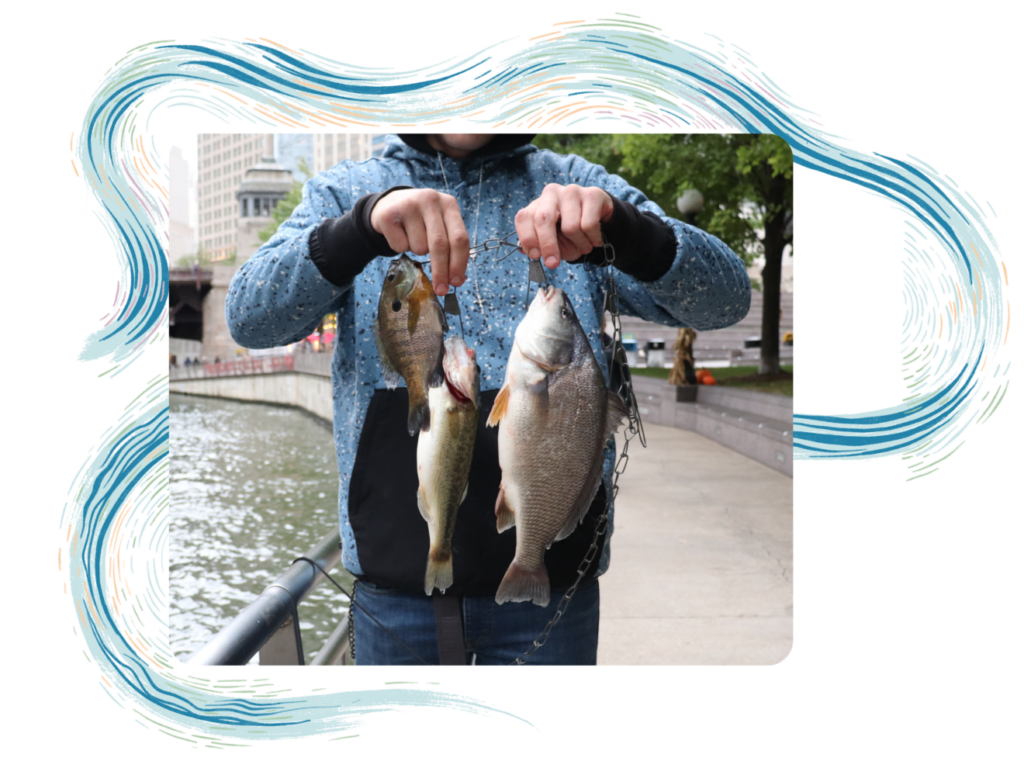
The Riverwalk has become a place where people can actively engage with the river. In addition to fishing, people gather to eat at restaurants along the water, spend time with friends and family, kayak, and engage in programming run by organizations like Friends of the Chicago River to learn more about the river. These activities create opportunities for people to build a personal connection to nature, demonstrating that access to nature does not have to require leaving the city.
Like the change in human interaction with the river and riverfront, wildlife sightings are another powerful example of river transformation. “We saw a beaver downtown the other day,” Josh shared. “It was on the floating islands by the Jetty.” Moments like this underscore just how far the river has come. From an industrial waterway to a habitat capable of supporting diverse species, even in the heart of downtown, the Chicago River is increasingly becoming a place where people and nature can coexist. A prime example of how far the river has come is last year’s historic Chicago River Swim, where 263 swimmers braved the cold and conditions and swam 1- or 2-mile stretches of the Chicago River. Although the 2026 Swim was cancelled due to weather and river conditions, the inaugural Big Jump offered an opportunity for the public, elected officials, local leaders, and celebrities to jump into the river while raising funds for ALS research and youth swim education.
At the same time, the Riverwalk highlights ongoing challenges. In many downtown sections, the riverbed remains capped with concrete, and vertical seawalls limit habitat potential. These conditions mean that some species found in other parts of the river system cannot thrive here. Yet even within these constraints, the Riverwalk demonstrates how thoughtful design, like floating wetlands and improved edges, can begin to reintroduce ecological function.
“The river is at a place where it’s cleaner than it’s been in 150 years, which is awesome, but we’re not done. We always have to think about the next potential threat, or what we need to be watching out for, whether its an invasive species or changing a policy on a federal level. Luckily we live in a place like Chicago that really values it’s environment” – Josh Cole
Beyond its local impact, the Chicago Riverwalk and Chicago’s larger river system represents something larger: a model for how cities can rethink their relationship with water and the role that each person plays in operationalizing that model. “This story… can be taken by anyone around the world and be related to their water system,” Josh reflected. Whether a place is dealing with pollution, scarcity, or abundance, the lessons from Chicago resonate. A marker of the global reach of the Chicago River’s story, Friends of the Chicago River won the Thiess International River Prize in 2025. “This river is being seen on a global level as a success story. That doesn’t mean that the work is over, but it’s been recognized as a really important success globally, and all Chicagoans should be proud of that.”
For Josh, sharing the story of the river is a civic responsibility. “I feel responsible for every single person that comes through… to make sure that they can take away at least one thing,” he said. Whether it’s a renewed appreciation for urban waterways or a commitment to environmental stewardship, the Riverwalk offers a powerful entry point for learning and action, and the river’s progress is not guaranteed. We need to sustain it. And only collective ownership will make that possible.
Reach 3 (Main Stem / Downtown / South Branch)
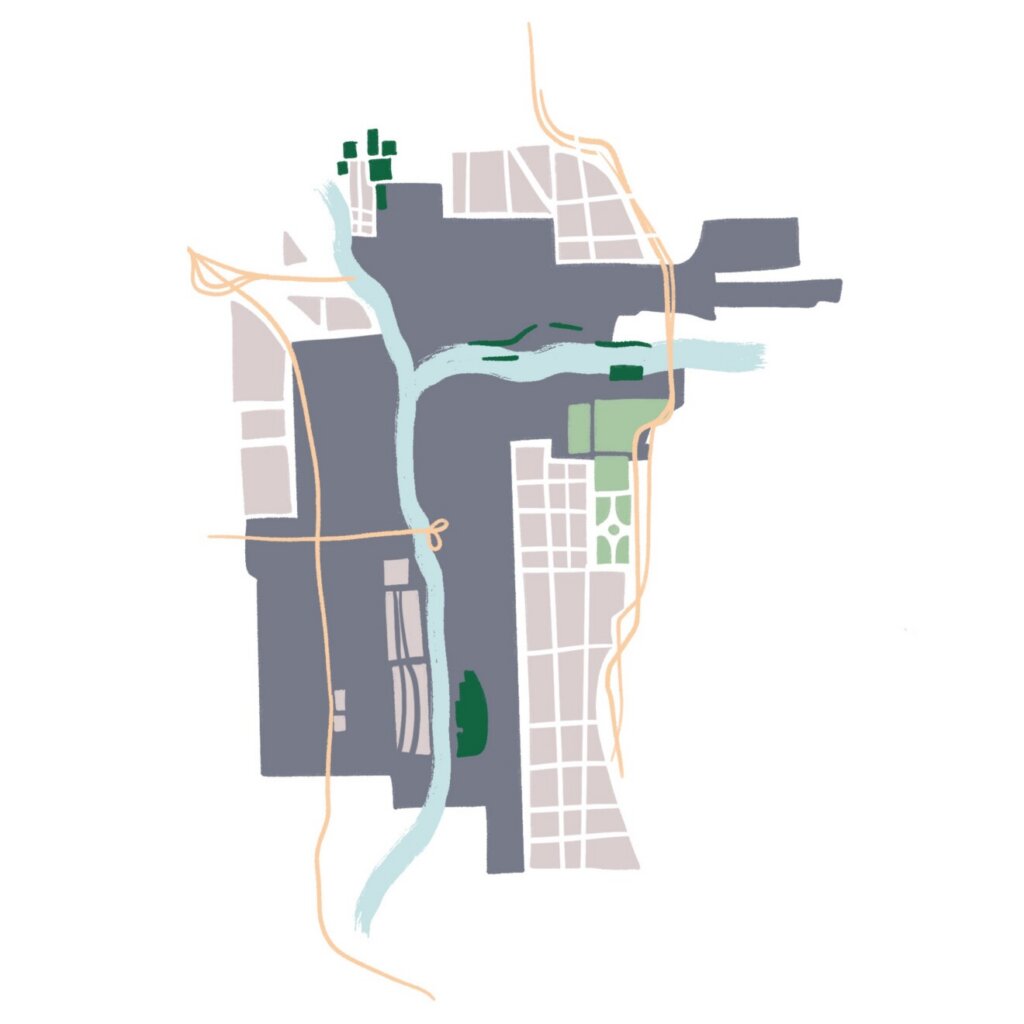
Explore MPC research and case studies from the other reaches in the Chicago River System below.