
In the Current: River Park (Reach 1)

By: Rachel Gaunce

By: Morgan Murphy
November 4, 2026 / Research
November 4, 2026 / Research
A case study on restoration
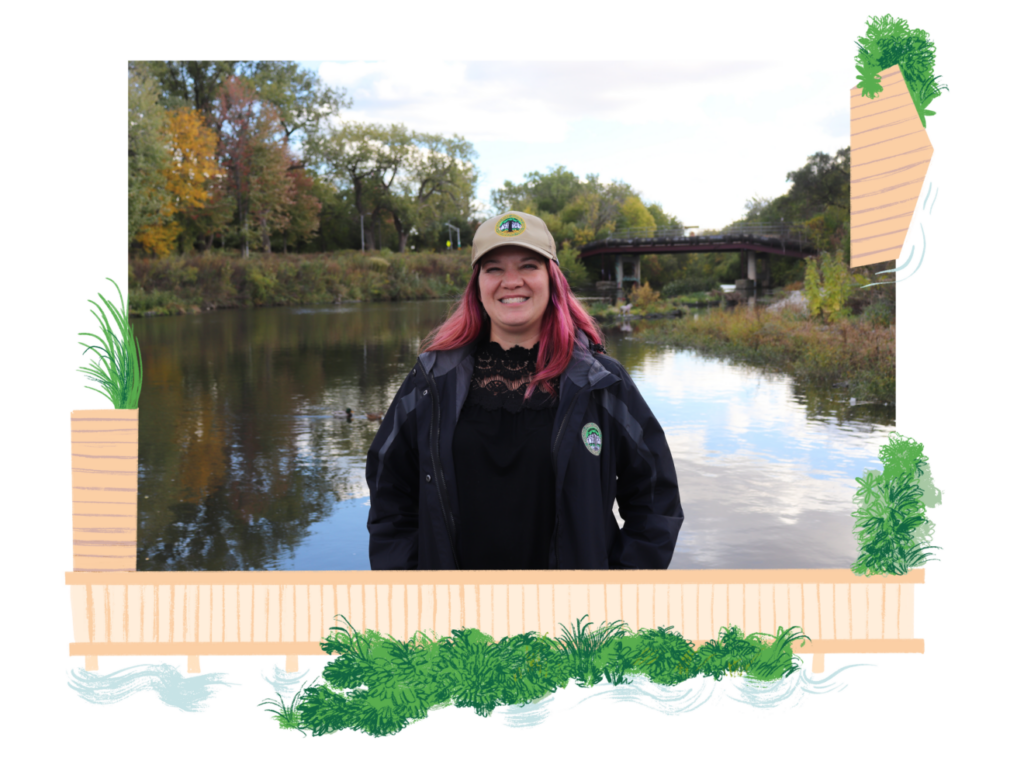
On a recent visit to the North Branch and North Channel intersection at River Park, MPC Associate Rachel Gaunce and Director Morgan Murphy joined Lauren Umek (Urban Ecologist and Project Manager with the Chicago Park District – shown left) to understand more about the north branch of the river. Lauren revealed just how dramatically this landscape has changed over time, especially in recent years, and how deeply residents and river restoration advocates across the city have embraced it.
Sitting along the riverbank for the interview, it quickly became clear that this is no longer a hidden or forgotten space. People passed by constantly: Chicagoans biking along the trail, kids making their way home from school, and others out for a walk alone, with friends, or with their dogs. The riverfront felt alive, not just with human activity, but with birds, plants, and movement in the water itself. During the interview, Lauren even pointed out the local legend, Howard—a duck/goose hybrid!
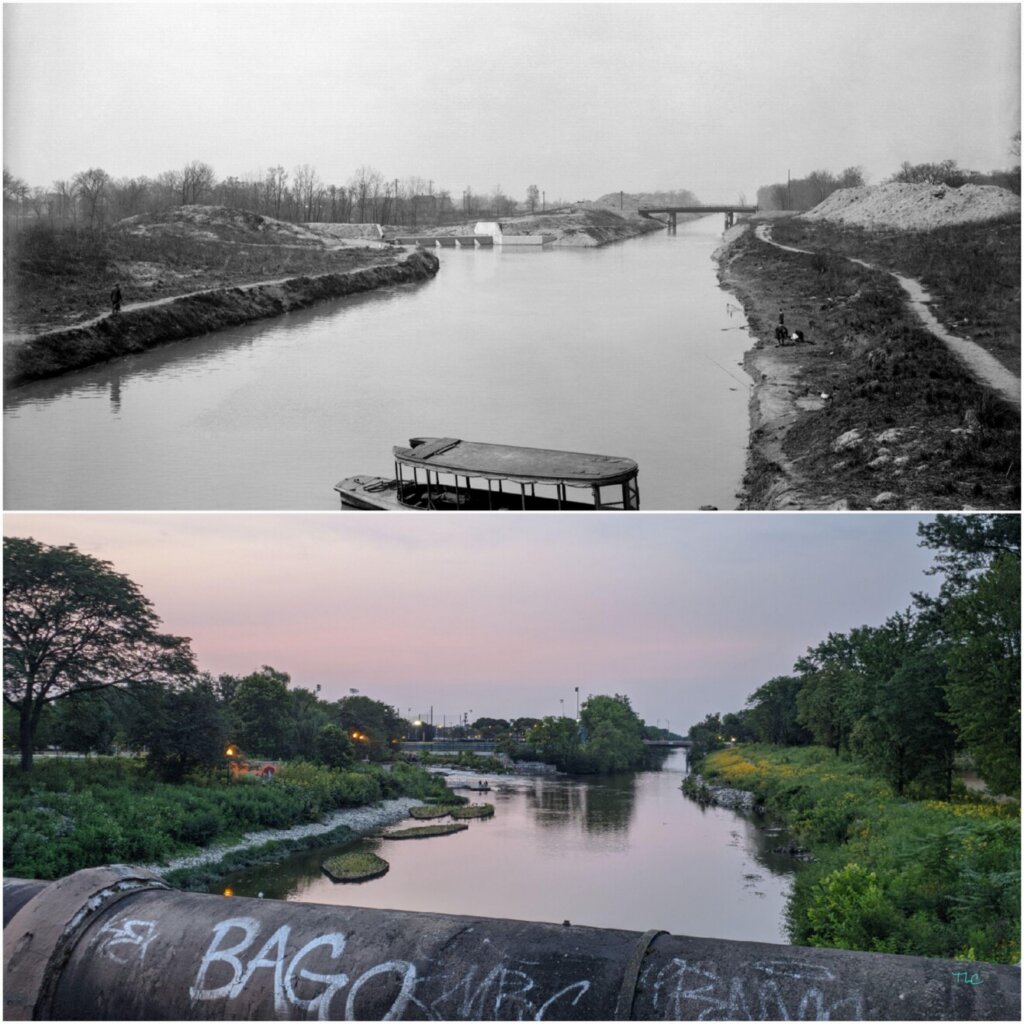
A little over a decade ago, this same stretch of river was largely inaccessible and uninviting. Dense invasive vegetation and physical barriers, like fences, obscured the water, limiting both visibility and engagement with the water, the riverbank, and the surrounding area. The idea of coming here intentionally to walk, paddle, or simply spend time is a relatively recent phenomenon. The turning point came with restoration efforts like the Horner Park Restoration Project about a mile south of River Park, which started in 2013. Though initially controversial, these interventions fundamentally changed how people experienced the river. By removing barriers like chain-link fences, restoring native habitats, and creating pathways for easy movement, the project opened up new possibilities for interaction. In reflecting on the Horner Park restoration Lauren said, “There was [initially] community rallying to make sure that [the restoration] didn’t happen . . . Lots of restoration is ugly. It’s a lot of chainsaws, a lot of trees, and bringing bulldozers out. It’s something that looks very destructive and, short-term, is pretty destructive, but long-term offers this really positive thing that is now a treasured resource . . . So I think there’s now a shift in understanding, at least locally along the North Branch.”
This shift in public perception helped catalyze the 2018 restoration of River Park, a major project led by the Army Corps of Engineers, Friends of the Chicago River, the Metropolitan Water Reclamation District of Greater Chicago, and The Chicago Park District, which involved removing a 100 year old dam to open travel pathways for fish, bank restoration, and large-scale native planting. That same intervention also opened travel pathways for kayaking and canoeing without portaging over or around the dam to access the rest of the river system. The removal of the dam marked the removal of “Chicago’s last waterfall” and its replacement with a gently sloping series of small stone piles and gravel beds that allow fish to migrate upstream.
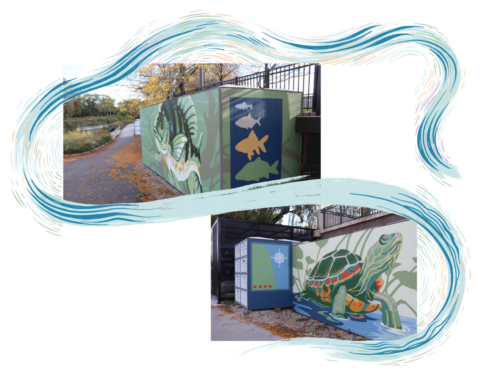
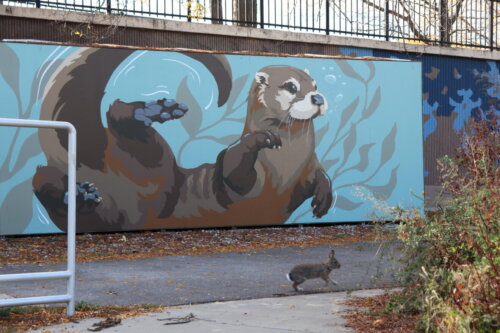
Today, those possibilities are fully realized in the range of amenities that support both recreation and connection to the river. Accessible launches for kayaking and canoeing make it easy for people to get onto the water, while nearby storage units for paddling equipment lower the barrier to entry for those living in urban spaces who have limited storage space and a desire to paddle the river. Numerous trails along the riverfront, including ones that jut down to the water’s edge, provide continuous access for walking, running, biking, and relaxing. Floating gardens have been established and continue to take hold and offer habitats for native species.The site also reflects a thoughtful integration of culture and ecology. Murals commissioned from a local artist celebrate the native flora and fauna of the section of the river system, with artwork featuring native species found in the river historically and in present day. The inclusion of this artwork not only beautifies the space, but also deepens public awareness of the biodiversity that now, and in the future, will define the river corridor. Over the years that followed restoration, the impact has become undeniable. The revitalized riverfront has continuously drawn large numbers of visitors from the surrounding area and beyond.
Paddling programs were launched in the area and sold out almost immediately, signaling a strong demand for river-based recreation. Over recent years, the Chicago Park District invested in an accessible canoe slip and platform, shown below.
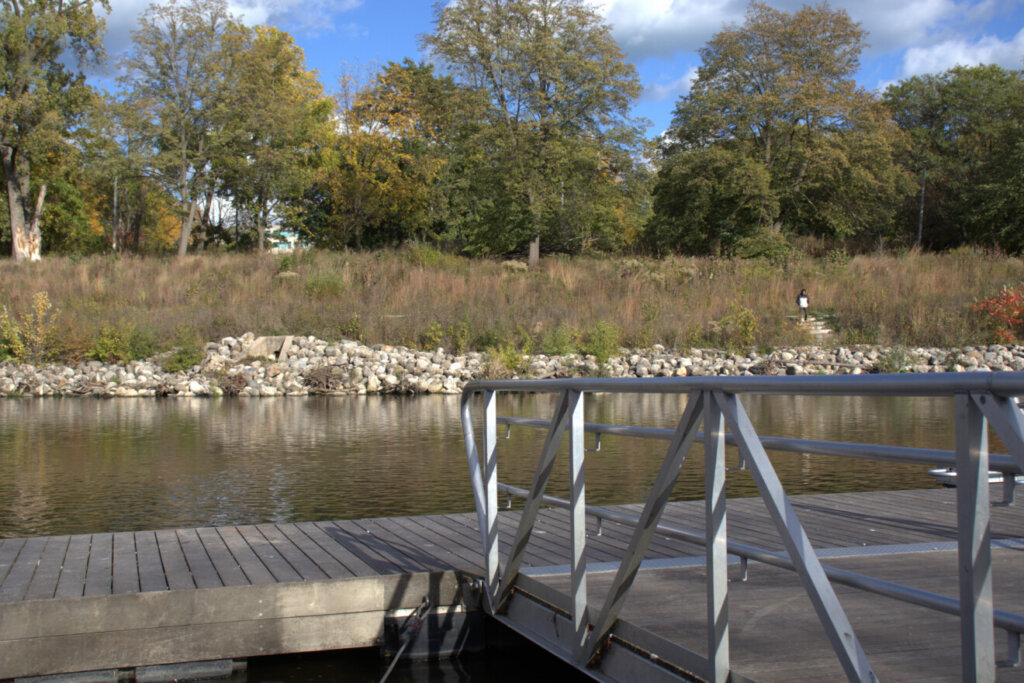
What had once been overlooked became a destination. Lauren shared, “[along the North Branch] there’s a pretty well-connected riverfront trail, and it’s so busy all the time, which is really amazing to see. It’s a great place for people to go from point A to point B, or just have their exercise: their evening walk, or go for a bike ride, or walk their dogs. And I think the restoration work plays into how enjoyable that space is. Residents here have something to look at: there are birds and butterflies and different plants and different pieces of foliage over the time, and this level of diversity didn’t exist here in past decades.”
Equally important has been the shift in public understanding of restoration in general. Early resistance to restoration highlighted the challenges of communicating ecological change, especially when it involves temporary disruption or the removal of vegetation without informing residents about the larger picture or needs of the land. Lauren shared that, over time, however, the visible results have helped bridge that gap. Existing projects now serve as proof points – making future restorations less intimidating and more widely supported.
There is also a sense that this type of transformation and land use inspires similar projects. As more sections of the river become accessible and ecologically vibrant, interest continues to grow. “The more people were able to see the river, the more they wanted to see of it,” Lauren noted. And these restoration and transformation projects become possible because of those that came before them. Lauren shared, “Every time we’ve done a river restoration project, we learn something new about the best methods.”
Beyond its environmental and recreational benefits, the North Branch offers something less tangible but equally important for Chicagoans: a sense of escape within the city. Time spent along the river can feel transportive, like stepping away from the density and intensity of urban life without ever leaving it. “For a moment, you forget you’re in one of the biggest cities in the country,” Lauren shared. Similar to the experience of being on the lakefront trail, this blending of nature and city is part of what makes Chicago a unique location and destination.
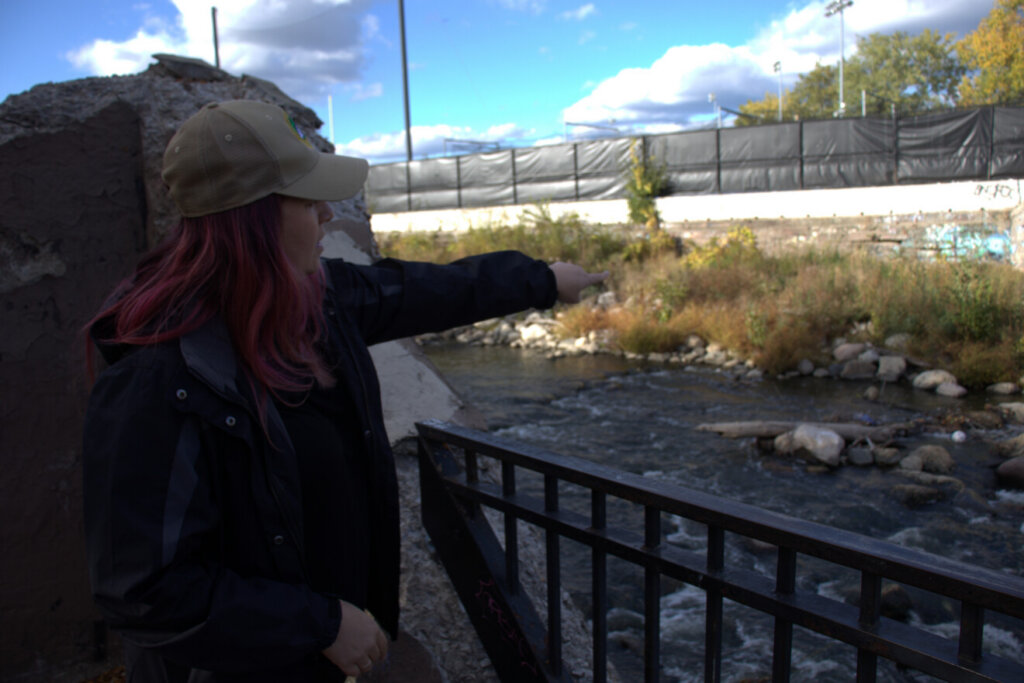
Looking ahead, Lauren’s vision for the river is both simple and expansive: a fully accessible, interconnected corridor that supports people, wildlife, and everyday experiences. Achieving that vision will require continued collaboration among public agencies, community organizations, and residents. Lauren stated, “I think the area should be accessible for people. This area should be full of people, and birds, and ducks, and all those things”.
The North Branch demonstrates that when access is prioritized and restoration is thoughtfully implemented, the river can become more than just a physical feature. It becomes a shared space that shapes how people experience and value their city.
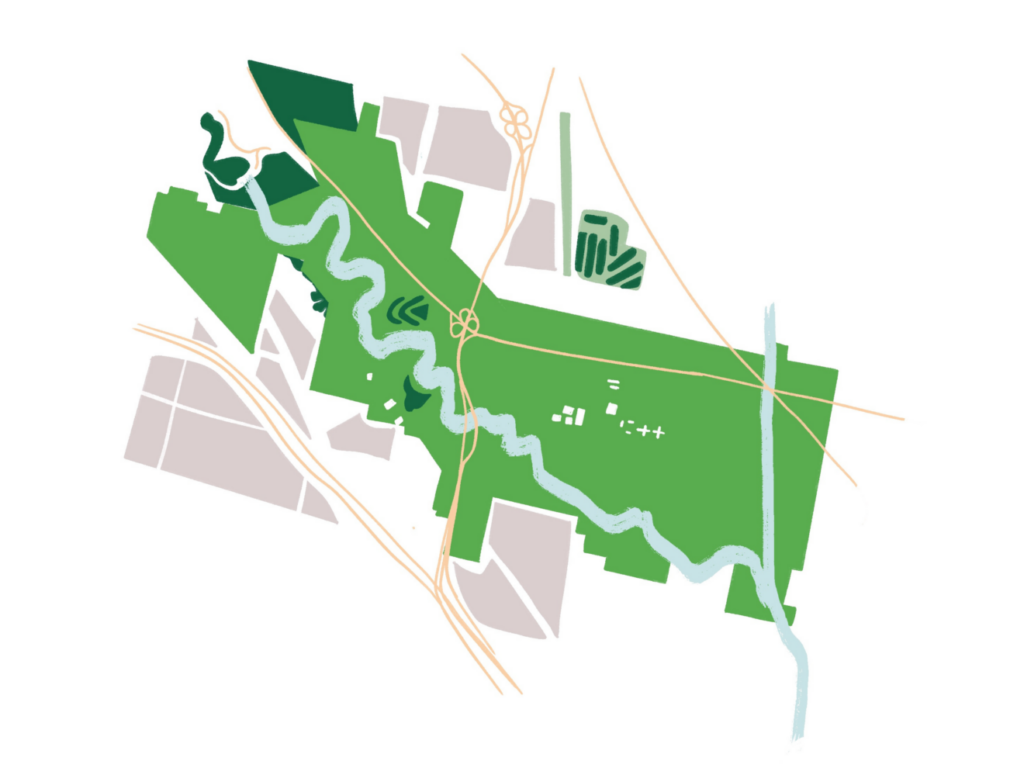
Reach 1 (North Shore / North Branch)
Above is one story of transformation in the Chicago River System, specifically for Reach 1 (North Shore / North Branch). Want to learn more about this area or the Chicago River System as a whole? Explore the data here.
Explore MPC research and case studies from the other reaches in the Chicago River System below.