In the Zone: A Chicagoan’s Guide to Zoning and Land Use

Illustrations by Lucie Van der Elst (lucie-vanderelst.com)
View full guide
Our digital versions can be printed (double-sided) to standard letter-sized paper with landscape orientation, then stapled on the short edge to make a flat booklet. If you want to create your own folded booklet (5.5″ x 8.5″), please contact Emma Boczek.
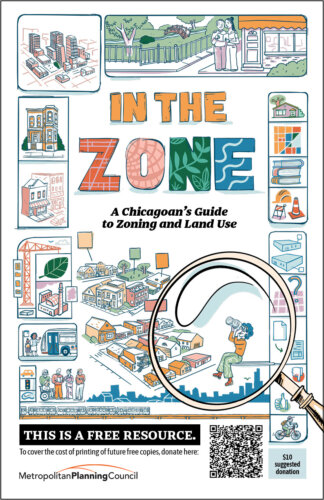


In the Zone: A Chicagoan’s Guide to Zoning and Land Use © 2025 by Metropolitan Planning Council is licensed under CC BY-NC-ND 4.0


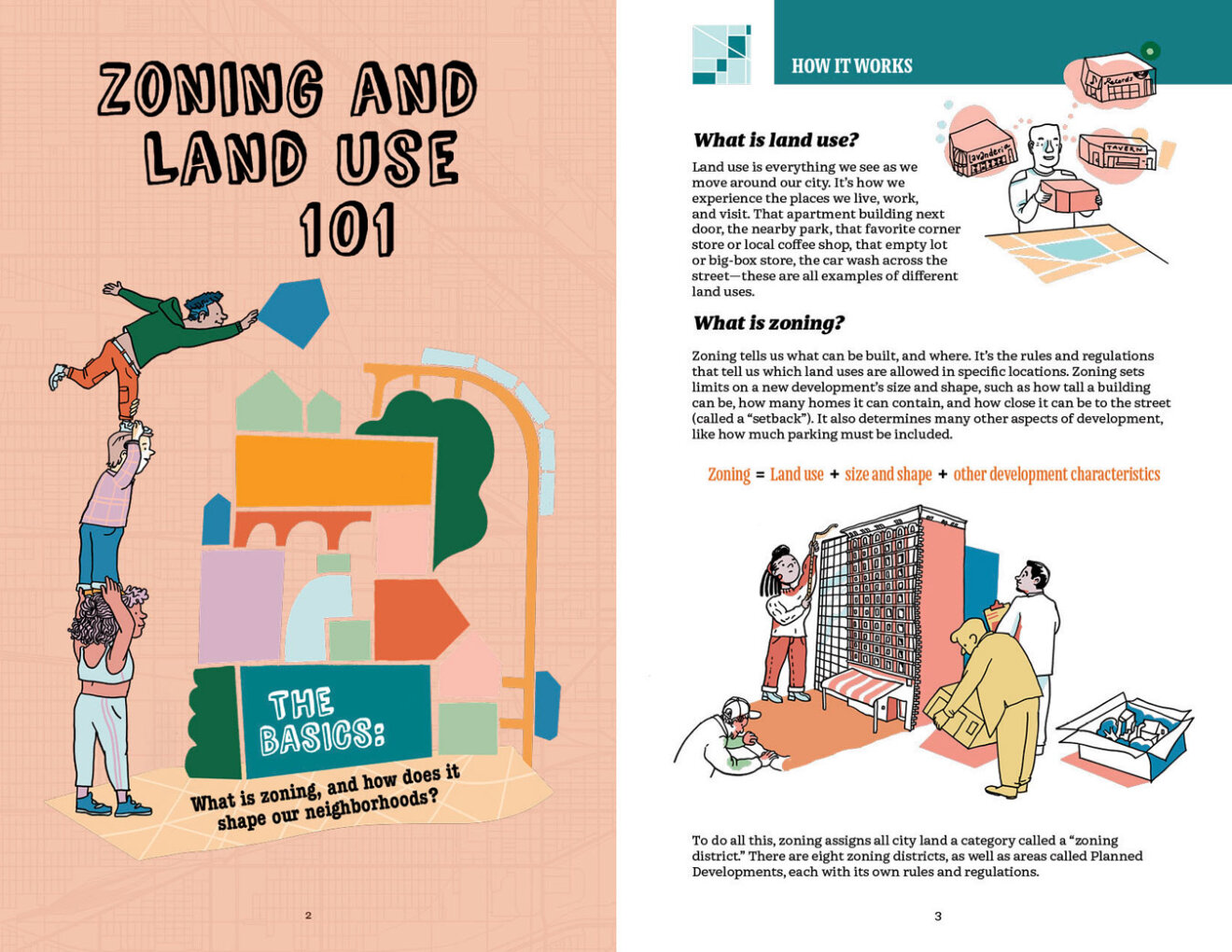
What is zoning? How does it work here in Chicago?
How has it shaped the city we live in today?
As part of our Zoning and Land Use Assessment and Recommendations initiative, and in partnership with members of the initiative’s Community Advisory Group, Metropolitan Planning Council (MPC) developed this guide to help you understand and engage with zoning processes and policies in your neighborhood. This guide is not a definitive or official resource to zoning. Instead, it’s a starting point—a toolkit to use, share, and discuss with others in your community.
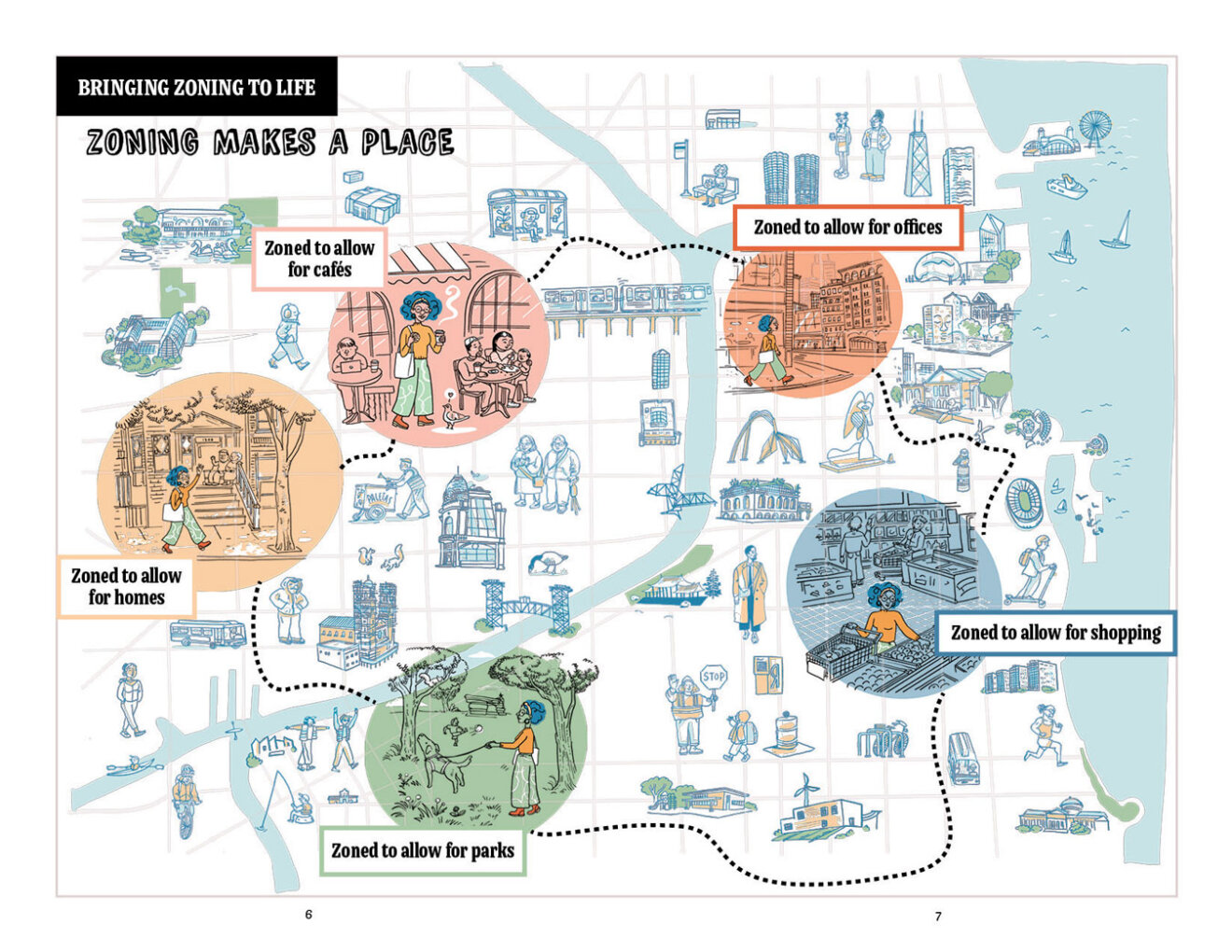
Zoning is a tool for regulating what goes where—deciding how the land uses that coexist within our city interact with one another. It’s also one piece of a long, ongoing history of laws and practices that have contributed to a segregated Chicago, with disinvestment in some neighborhoods and abundant resources in others. Chicago’s zoning ordinance is a system of interconnected rules and regulations, created over time. It sets out some big objectives: protecting public health, safety, and general welfare, among many other goals. These rules and regulations were created by people. Equipped with the right information, it’s possible for Chicagoans to understand, navigate, and even start to reimagine our city’s zoning system: from its purposes to the outcomes it produces.
The guide is divided into three sections:
- Zoning and Land Use 101: The Basics
- Zoning and Equity: The Background
- Zoning in Chicago: Following the Rules Through the Maze
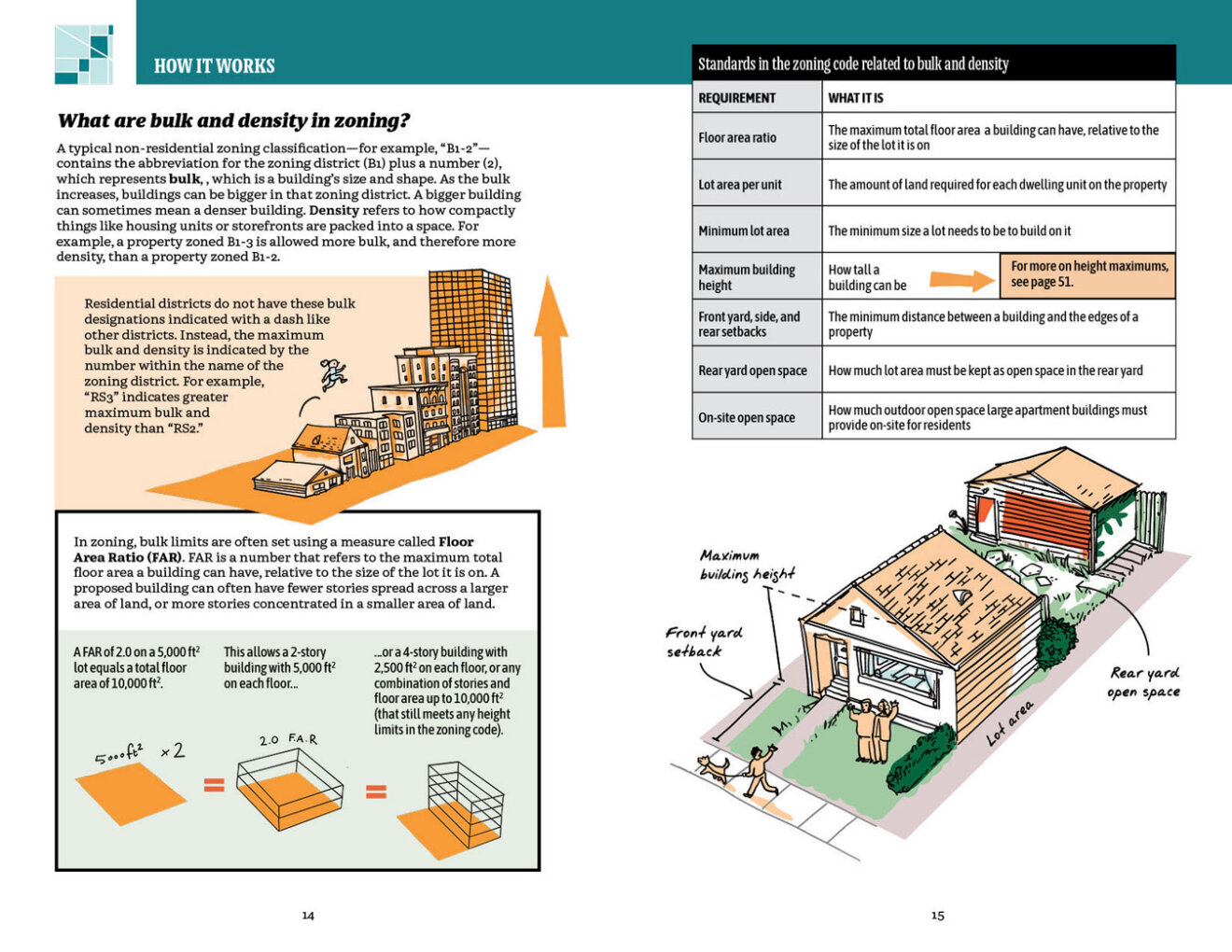
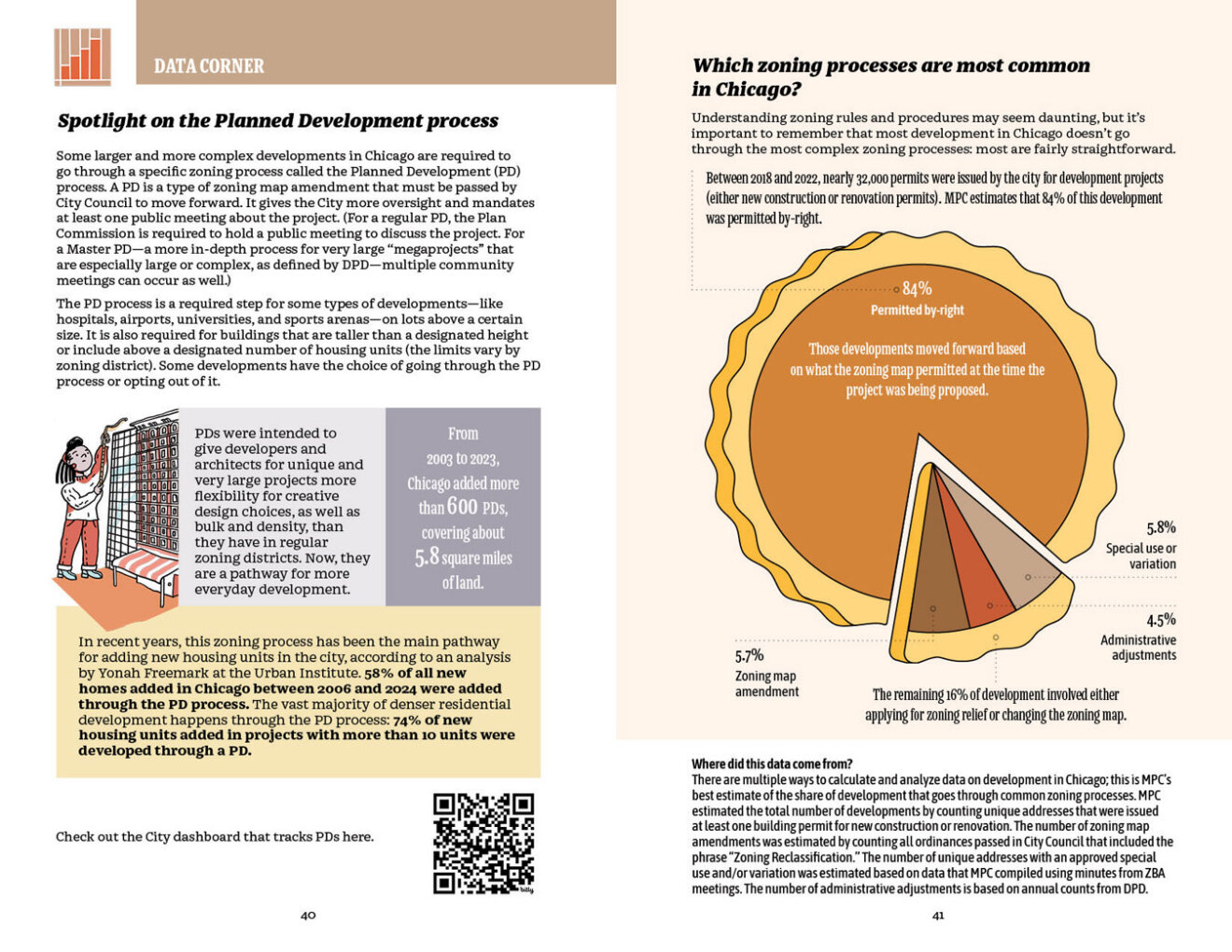
Each section is full of colorful illustrations to help visualize the information by showing historical timelines, case studies, and graphic stories. Take a look at just a few sample pages below.

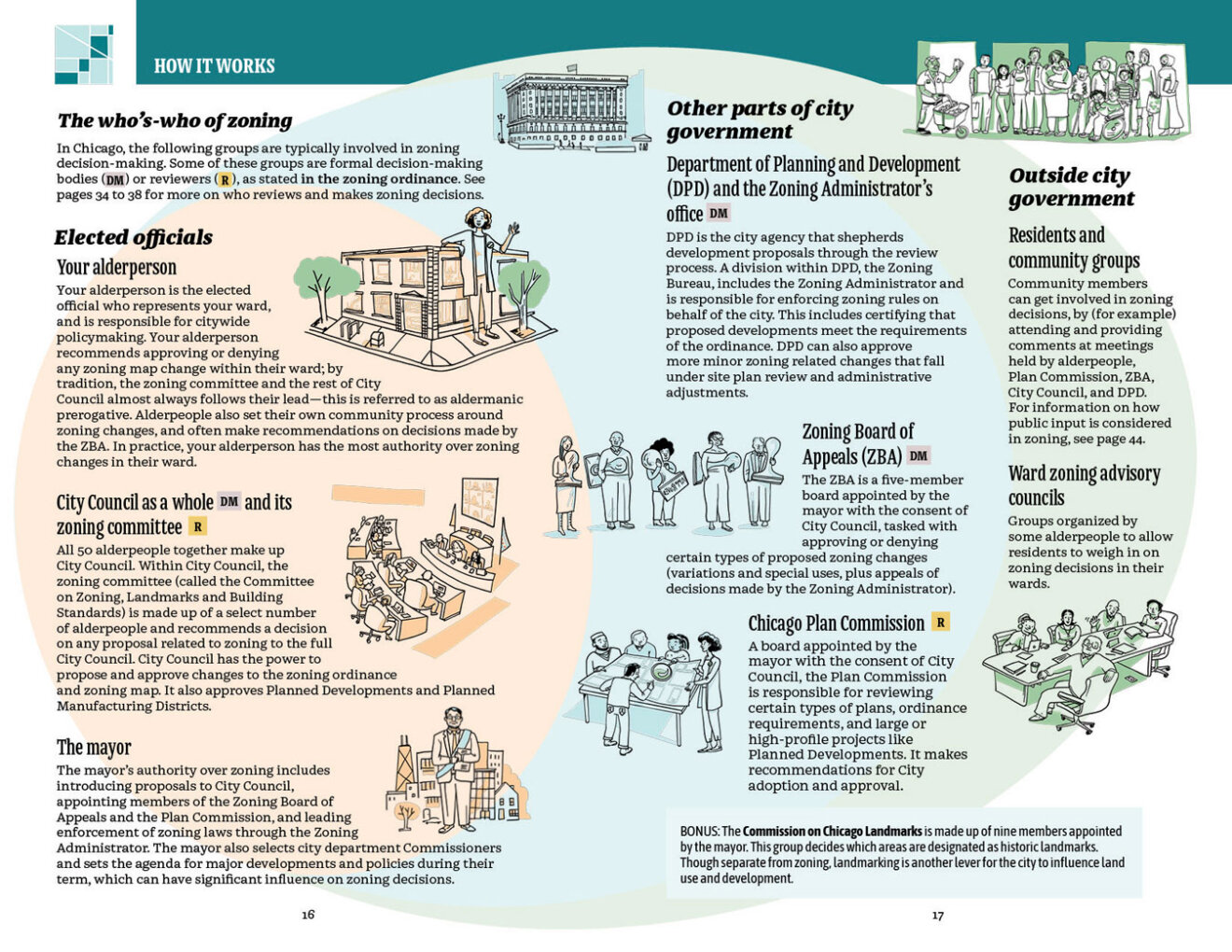
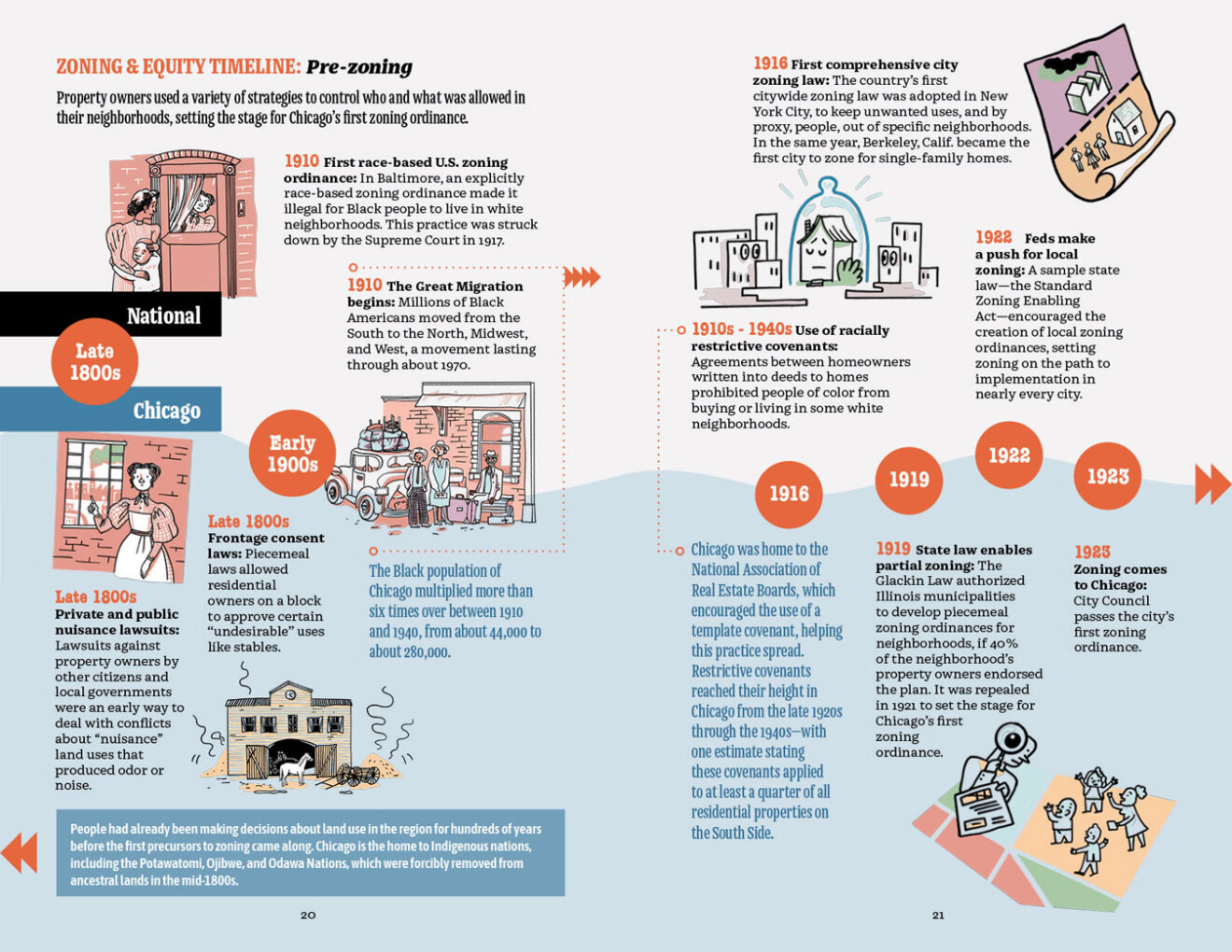
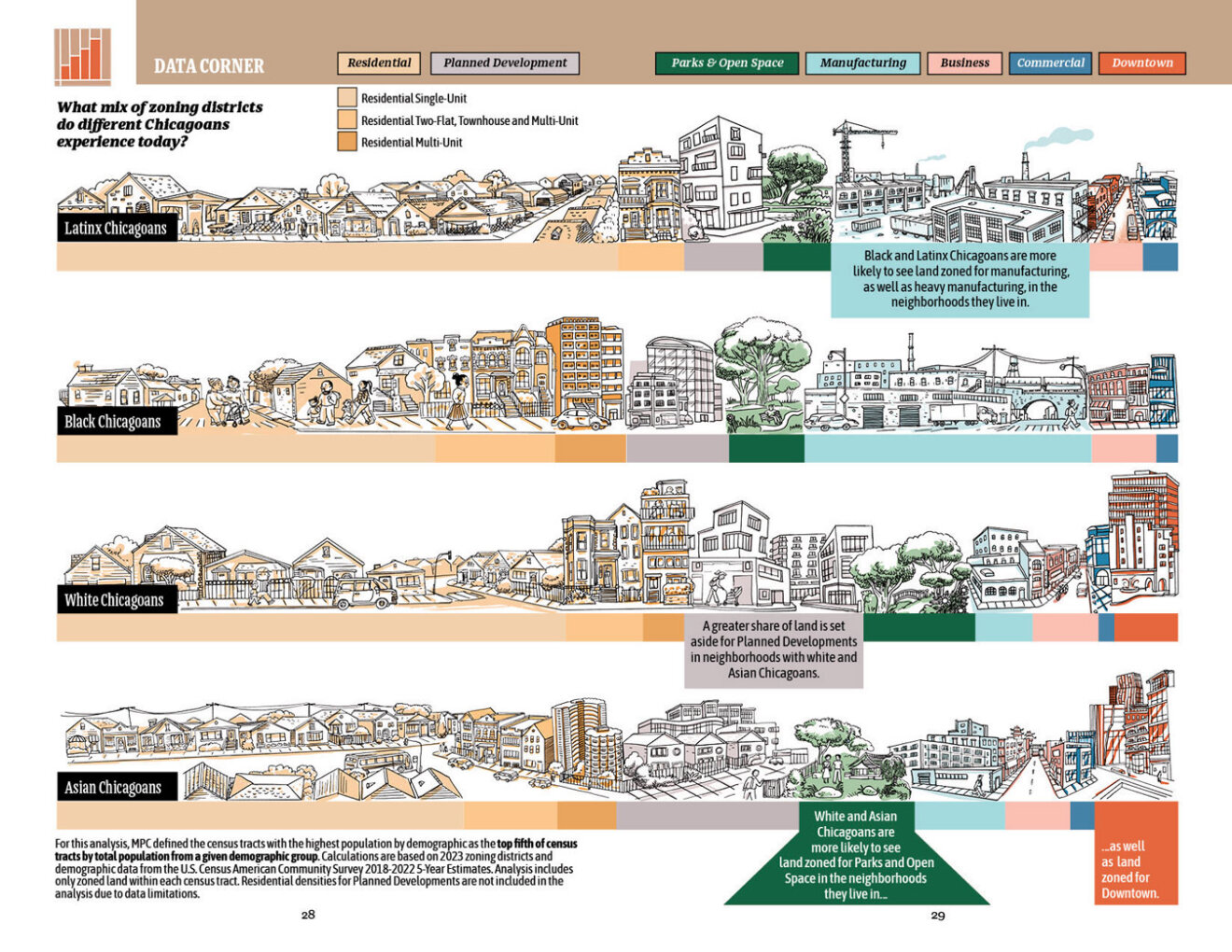
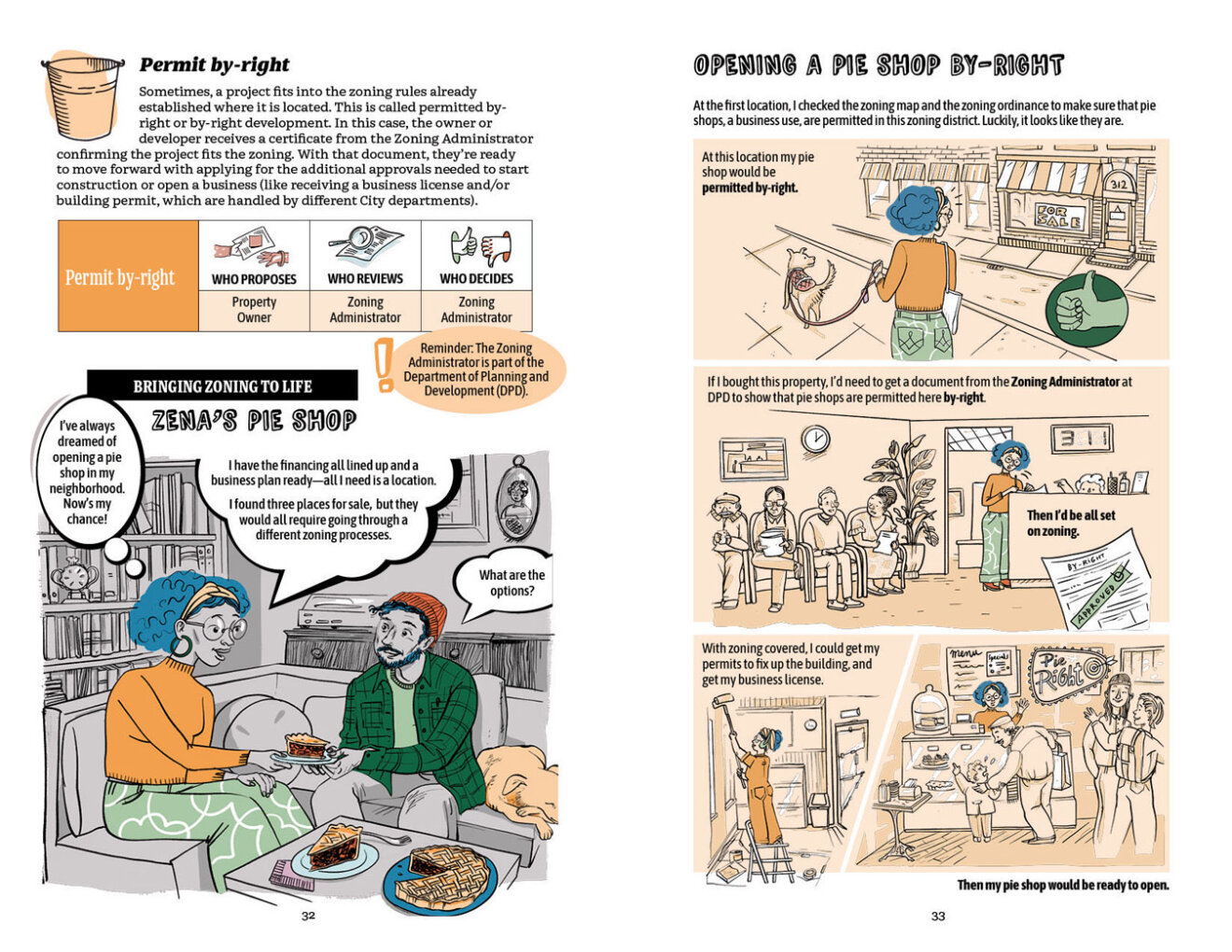

MPC thanks The Chicago Community Trust and Robert Wood Johnson Foundation for funding this work. Without their support this zine would not have been possible. We also acknowledge the following additional funders:
- U.S. Bank
- Regional Plan Association
- PNC Foundation
- Peoples Gas Community Fund
- Robert R. McCormick Foundation
- John D. and Catherine T. MacArthur Foundation
- The Crown Family
- Bowman C. Lingle Trust