
A New Era for Transit in Northeastern Illinois
NITA holds its first board meeting, marking a new era for transit in Northeastern Illinois
September 10, 2026, marked the beginning of a new era for transit in Northeastern Illinois. The inaugural meeting of the Northern Illinois Transit Authority (NITA) Board was filled with celebration, optimism, and a clear sense of responsibility as board members and regional leaders reflected on the work ahead. Metropolitan Planning Council (MPC) was excited to see the new agency and many of the reforms we advocated for come to fruition at this first board meeting, marking an important milestone in the region’s transit.
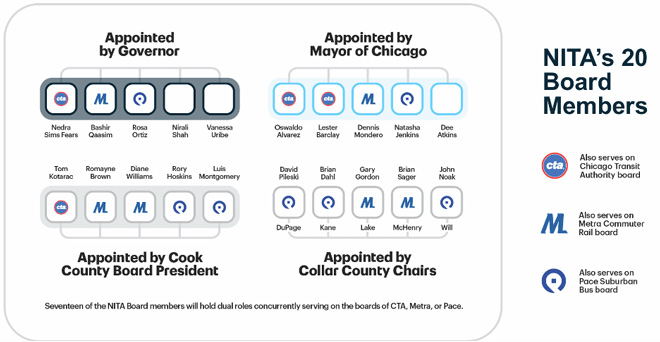
The board’s structure reflects the regional vision that MPC advocated for to advance, bringing agencies together through an intentional governance model designed to foster collaboration, shared decision-making, regional perspective, and better information exchange across the transit agencies.
The meeting opened with remarks from the legislators who championed the NITA legislation. Their message was consistent: transit reform was driven by years of public engagement, collaboration, and a shared desire to improve how people move throughout the region.
Senator Villivalam acknowledged the contributions of the Illinois Clean Jobs Coalition, labor organizations, the Chicago Metropolitan Agency for Planning (CMAP), and many other partners who helped advance the legislation. He noted that public hearings and town halls held throughout the previous year demonstrated both the importance of transit to residents’ quality of life and the challenges facing existing systems. He emphasized that the legislation represents a rejection of the status quo, providing a $1.5 billion investment alongside meaningful reforms. As NITA begins its work, he urged board members to keep riders at the center of every decision, reminding them that expectations are high and that legislators stand ready to be partners in the agency’s success.
Representative Delgado echoed that sentiment, encouraging the board to act boldly and focus relentlessly on delivering a world-class transit system. She highlighted that the legislation gives the board the tools needed to provide the service the region deserves and stressed the importance of thinking from the rider’s perspective while approaching transit challenges regionally.
Representative Buckner reinforced the significance of the moment, stating that “NITA is not simply another acronym layered on top of existing problems”. Instead, he described the agency as a “reset” and emphasized that the board has been given a mandate to create a safer, more reliable, and better coordinated transit system while demonstrating that public investment can deliver meaningful results.
Taken together, the legislators’ remarks highlighted a central message: NITA has been given both the tools and the responsibility to transform transit service across the region, with riders at the center and regional collaboration as a guiding principle.
A Regional Vision
Appointing authorities and regional leaders also emphasized the need to move beyond traditional boundaries and work together to improve transit outcomes.
Cook County President Toni Preckwinkle noted that transit has operated in silos for too long and stressed that the success of the transportation system depends on the region’s ability to think and act collectively. She highlighted the opportunity to provide riders with a system that is more reliable, connected, and accessible.
Deputy Governor Bria Scudder emphasized that NITA will require decisive leadership from its board. While acknowledging that the inaugural meeting represents an important milestone, she reminded attendees that it is “only the beginning of the work necessary to build the future transit riders deserve.”
Representatives from Lake County and Kane County similarly focused on the need for regional thinking. They emphasized that riders do not care where one transit agency’s boundaries end and another begins. Instead, they care about reliable service that gets them where they need to go. The board, they stated, has an obligation to create a seamless transportation network that begins with the rider, not the agency. The message was clear: transit decisions can no longer be constrained by jurisdictional boundaries. The mandate is to collaborate, innovate, and maximize the potential of the entire regional transit network.
Illinois Department of Transportation Secretary Gia Biagi expressed excitement about NITA’s future, affirming that IDOT stands ready to be a strong partner as the agency begins implementation.
Board Leadership Takes Shape
The meeting also provided an opportunity for the newly appointed board members to introduce themselves and discuss the experiences they will bring to the agency. Members highlighted their personal backgrounds and experience with transit while expressing enthusiasm about contributing to a more integrated regional transit system. To learn more about the new directors go to 39:45 in the meeting video to hear their introductions.
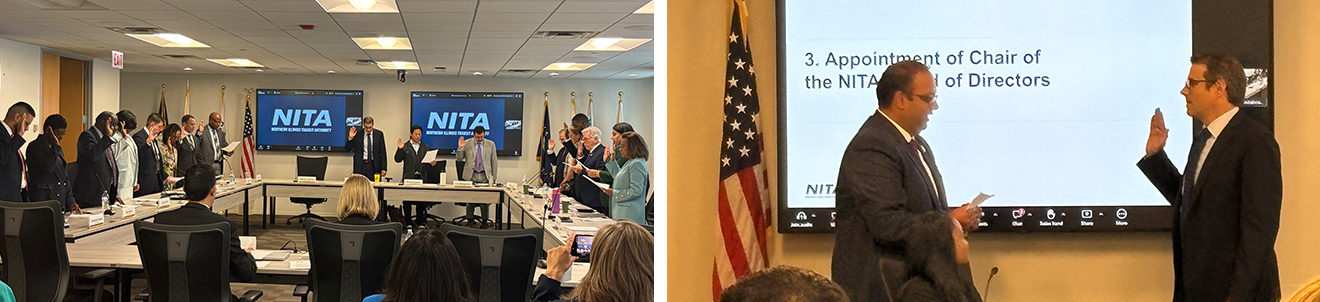
The board then unanimously elected Tom Kotarac, vice president of the Civic Committee of the Commercial Club of Chicago, as its first chair. A member of the RTA board since 2023, Tom was recognized for his leadership during the development of NITA and his role in leading the RTA board’s ad hoc implementation committee before the agency’s formal launch.
In his remarks, Kotarac spoke about the long-term vision for the agency and what success could look like for future generations. He described a future system where stations are among the safest public places in the region, riders can move seamlessly between services, transit supports economic development, and businesses view strong transit as a competitive advantage.His vision centered on a fully integrated network characterized by “one ticket, one timetable, one network.”
The board also appointed Jamie Rhee as interim executive director for a six-month term while a national search is conducted for the agency’s permanent executive director. She has extensive experience overseeing complex government departments and has previously served in roles including as Chicago’s Chief Procurement Officer, Chicago’s Aviation Commissioner and General Counsel for the O’Hare Modernization Program.
Early Priorities for Implementation
The board received briefings on several implementation efforts that will shape NITA’s early work.
Fare Policy
Among the most significant upcoming responsibilities is the agency’s authority over fare policy. Board members heard updates on efforts to create a more unified regional approach, including administration of two key programs:
- The pilot Transit Access Program, which has provided reduced fares for Supplemental Nutrition Access Program (SNAP) beneficiaries for Metra rides via a pilot since 2024, will be expanded to CTA and Pace.
- The Student Fare Program, which provides reduced fares for eligible students ages 7 through 20, will be extended to operate seven days a week and year-round, not only during school hours.
People Over Parking Act
Finally, staff presented information on implementation of the People Over Parking Act (POPA), an element of the NITA legislation that went into effect June 1, 2026. Staff shared that NITA and CMAP have developed a new interactive map that will help communities understand where the legislation prohibits local agencies from establishing a minimum numbers of parking spaces either ½ mile from a “public transportation hub” or 1/8 mile from a “public transportation corridor”. Developers are still allowed to develop as much parking as they think the market demands for each project, but municipalities are not allowed to require in a zoning code a generic minimum number of parking spaces linked to development types. The interactive mapping tool will support municipalities as they evaluate zoning ordinances, parking policies, and opportunities to access technical assistance from NITA. The staff presentation about POPA is available at 4:35 in the meeting video.
Establishment of Board Committees
The transition consulting team also provided an overview of organizational priorities and the committees required under the legislation. These include the ADA Advisory Committee and a Rider Advisory Committee, both intended to ensure that users have a meaningful voice in decision-making. The consultant shared a proposed framework for how to establish board committees:
- Meet Statutory requirements, e.g., ADA Riders Advisory Council, ADA Advisory Council and Board Safety subcommittee
- Add standing committees where NITA holds decision rights
- Use peer transit boards as a cross-check
- Consolidate adjacent responsibilities to streamline committees
The consultants proposed an initial set of committees:
- Safety
- Finance and Audit
- Capital Planning and Delivery
- Service Standards and Fares
The consultants suggested membership on the committees should consider representation by the various appointing authorities so all areas of the region can trust the outcomes. They should be designed to produce regional decisions, not to represent constituencies. They should avoid concentrating members who also serve on a service board in any one committee. Members’ professional expertise should be matched to the subcommittee subject area. Finally, committees should be as small as practical to enable deep consideration of the subject matter. Additional subcommittees could be added as needed. During the discussion it was raised that there will need to be a venue for discussion about transit-supportive development and economic development, potentially in the Capital Planning and Delivery Subcommittee.
Looking Ahead
The first NITA board meeting concluded with a strong sense of optimism and determination. The expectations are high, but so is the commitment shown by board members, legislators, local governments, and partner agencies.
At MPC, we are encouraged by the mindset this board is bringing to the task ahead. The combination of strong leadership, a clear implementation mandate, and a commitment to regional collaboration provides a promising foundation for the future of transit in Northeastern Illinois.
The work is only beginning, but the vision presented at this inaugural meeting reflects the goals that inspired the creation of NITA: a safer, more connected, more equitable, and more rider-focused transit system.
We look forward to seeing the service boards and regional partners bring the same energy and commitment to the work ahead.
To learn more about what is possible under the new NITA transit agency, read MPC’s report, A Vision for NITA: Riding Into the Future.