
In the Current: The Riverdale Community Land Trust (Reach 5)

By: Rachel Gaunce

By: Morgan Murphy
November 3, 2026 / Research
November 3, 2026 / Research
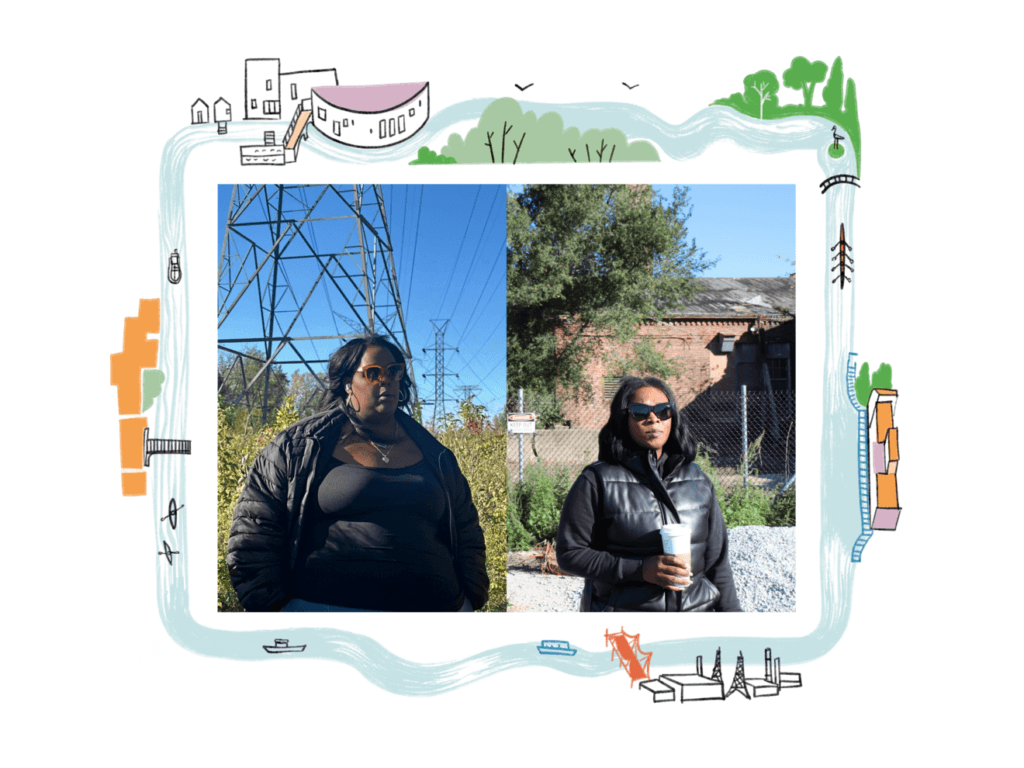
A case study on community power
This story is based on a walking tour of the Little Calumet River led by Adella Y. Bass – pictured left (Director of Health Equity & Community Engagement (People for Community Recovery (PCR)) and Jamira Johnson – pictured right (Executive Director of the Riverdale Community Land Trust (RCLT)). The walking tour was attended by local residents and advocates, as well as the Community Partner Council of the City of Chicago’s River Ecology and Governance Task Force. Beginning and ending near Ton Farm, the tour reflected the power and persistence of residents in Altgeld Gardens and Riverdale, who have long advocated for a healthier and more just future. Through PCR’s work advancing environmental and climate justice, affordable housing, economic equity, and community health, and the Riverdale Community Land Trust’s efforts to ensure longtime residents can stay, benefit, and prosper as the Red Line expands, residents are working to put community ownership and decision-making at the center of the riverfront’s future.
The Calumet River region has long been shaped by transportation and movement and has long been a place where questions of access, opportunity, and power play out. Before railroads and industry transformed the landscape, the river and its crossings were used by indigenous populations. Later, near the present-day Indiana Avenue bridge, the Dolton Ferry once connected trails and stage lines across the river and just north was the farm of Jan and Aagie Ton. These Dutch immigrants settled there in 1853 and, building on the work of Black and white abolitionists who were part of the networks known as the Underground Railroad, helped freedom seekers traveling to Chicago and moving onward to Detroit and Canada.
The tour began with Jamira reflecting on the historical significance of the area. She shared, “this historic site was settled as farm land where people were getting free from slavery. Since three years ago, it is designated as a national and state landmark as an Underground Railroad location”. The official recognition of this history, and the explicit mention of the removal of indigenous populations, ties today’s environmental justice movement with a much longer history of the river as a site of contestation, resistance, freedom, and community building.
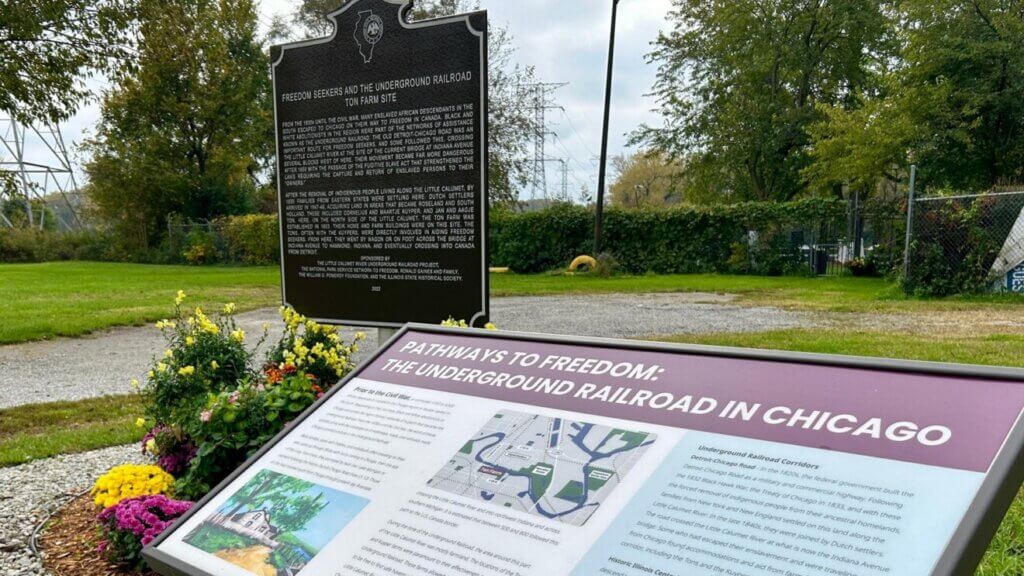
Along with the cultural and historical legacies, the landscape also holds the physical legacy of past decisions. Industrial development and infrastructure brought jobs and economic activity to the region, but also pollution and environmental health challenges. Old sewage pipes and infrastructure associated with former industrial uses remain embedded in the landscape, serving as reminders of how decisions made generations ago continue to shape residents’ experiences today.
Those decisions go beyond community health outcomes, too. One community leader reflected, “the infrastructure has shaped our experience here in the community. It has also inspired PCR to organize” with the mission of enhancing the quality of life for residents living in communities affected by environmental pollution. That same community organizing has created a different history of land stewardship, as well. Adella Bass-Lawson, Health Equity Organizer, PCR explained, “community involvement and stewardship of the land has been an important part of the community’s story.” A key example she described was the local food system over time. The Altgeld Gardens cooperative and Eden Green, an affordable cooperative established in the 1970s, were both given as examples – demonstrating that Riverdale and Altgeld Gardens have a history of residents using land collectively to build economic opportunity and strengthen their communities.
In dealing with more recent challenges, Jamira linked past collective action and ownership with the success of a recent idea that has taken hold in Riverdale. She shared, “a lot of cooperative economics happened here, so when we were organizing around the idea of a community land trust, there was eagerness and comfort with that approach.” The RCLT was formed with the goal of giving longtime residents a greater role in determining how land is used and ensuring that future investment creates lasting community benefit. It was established to center community voice in decision-making and create opportunity for community ownership. Specifically, the Red Line expansion brings new infrastructure and potential investment to the area, the land trust offers a way to help residents remain in the community while building both stability and wealth. Jamira shared that recently, “there’s been more real estate speculation, with lots of land changing hands.” Acquired RCLT land along and near the river can support affordable housing, cooperative economic opportunities, gardens, recreation, and spaces for community gathering rather than simply becoming another source of displacement or outside investment that does not benefit local families and residents.
Building on the Calumet Collaborative’s work generating, collecting, and using community input to shape the future of the region for its residents, the Collaborative is supporting two specific land acquisitions at this time. The acquisitions done through the land trust mitigate the risk of resident displacement by new development in the neighborhood by focusing on affordable housing and community wealth building. A community leader on the tour shared, “an exciting thing about our shared work with the community is that the community has really taken control over – they’re not just waiting around for the benevolence of whatever landowner. They’re in a position to be the landowners and are starting to acquire land and are really going to be able to control stewardship of the riverfront.”
The acquisitions are for community open space along the riverbank of the Little Calumet River, in partnership with NeighborSpace, the Chicago Department of Planning and Development (DPD), and Openlands. Jamira shared, “it was very important that we shore everything up with NeighborSpace and other partners, so that we can use their knowledge and experience in whatever sector they’re in – urban gardening, conservation, planning – to make this a space that supports us all”. Since the NeighborSpace acquisition has a deed restriction of no residential, the goal of that acquired land is for remediation. Jamira shared, “we are especially focused on how this land can safely grow food in the future with the urban growers collective.” She added, “there is talk to clear some space so there can be a history trail with plaques and information about former residents who went on from this area to make impact”, ultimately creating a resident-focused historical treasure hunt that leads to the river front.
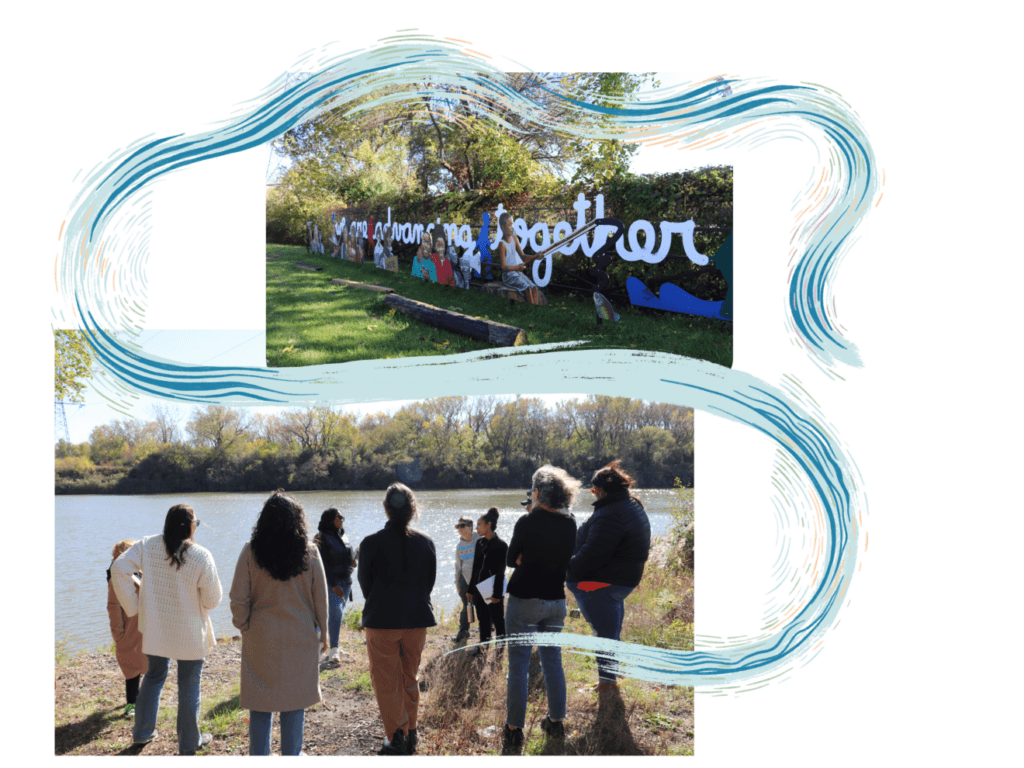
Through the RCLT, community ownership of land can help ensure that environmental improvements translate into tangible benefits for the people who have lived with environmental burdens for generations. For residents who have experienced the effects of pollution and industrial land uses, the necessary remediation is not simply about restoring an ecosystem for food production or creating trails, though those are important elements of transformation. It is about improving public health and creating a landscape where local families can breathe cleaner air, spend time outdoors, fish, play, and connect with the river safely.
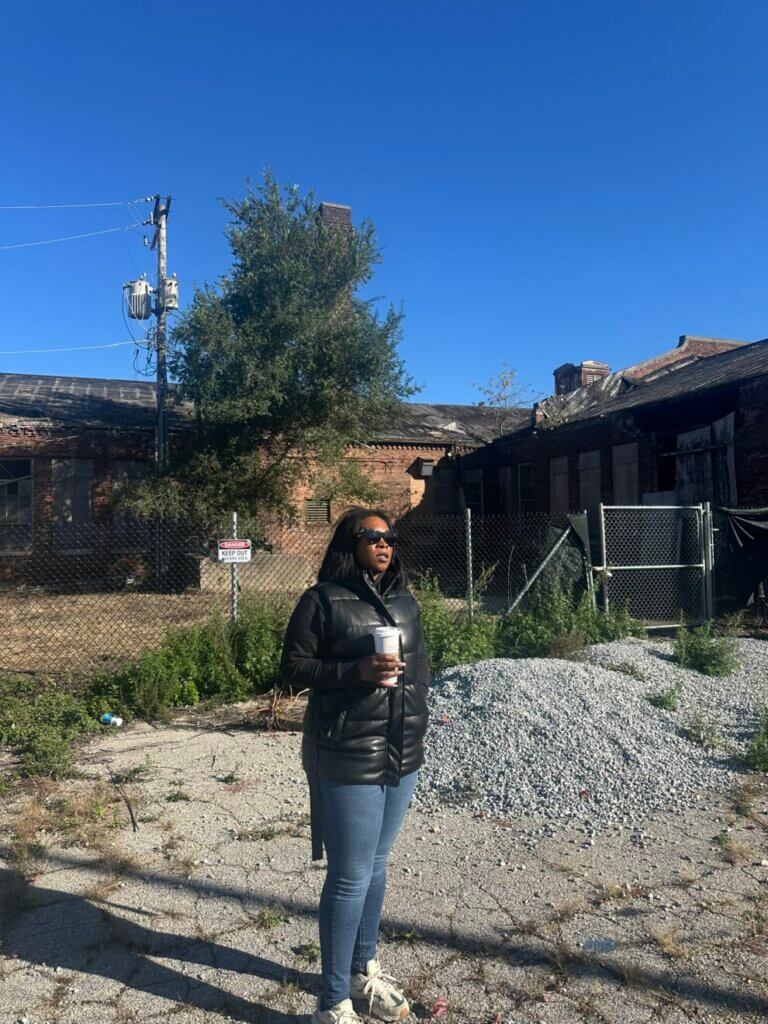
Future investment in the riverfront can offer opportunities to make that vision a reality, if done with community at the center. Adella shared that investment in the region can create places for learning and preserving the history of the Underground Railroad, new centers for community programming and organizing, affordable places to live, and spaces where residents can build relationships with the land, water, and others. Projects like PCR’s future environmental justice center in the historic C Building (shown behind Jamira in the photo on the right) in nearby Altgeld Gardens demonstrate how community facilities can become part of a broader network of places that support health, education, culture, and economic opportunity. The Little Calumet River tells two interconnected stories: a history of infrastructure, industry, environmental harm, and unequal investment and a history of everyday people using the landscape to pursue freedom, build community, keep local memory alive, and create opportunity for themselves and their families to thrive. Today, Riverdale leaders and residents are working to make the second story the foundation for what comes next.
The formation of the RCLT represents a hopeful next chapter. It is an opportunity to shift the terms of riverfront investment by putting residents at the center of decisions about land and ensuring that the benefits of change remain in the community. Rather than asking how the river can attract investment, the community is asking a more fundamental question: How can investment in the river help the people who live here thrive?
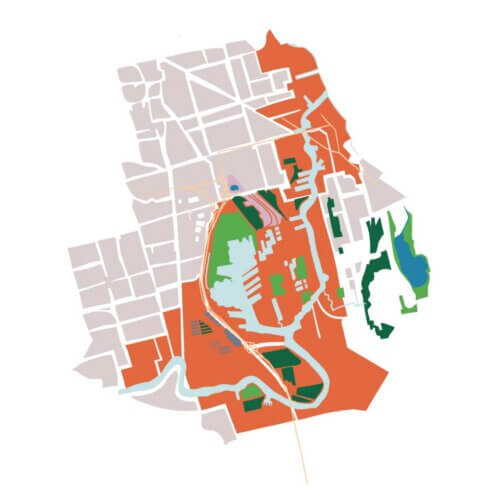
Reach 5 (The Calumet River)
Above is one story of transformation in the Chicago River System, specifically for Reach 5 (the Calumet River). Want to learn more about this area or the Chicago River System as a whole? Explore another story of transformation here and the data here. Explore MPC research and case studies from the other reaches in the Chicago River System below.
Explore MPC research and case studies from the other reaches in the Chicago River System below.