
A case study on community leadership and action
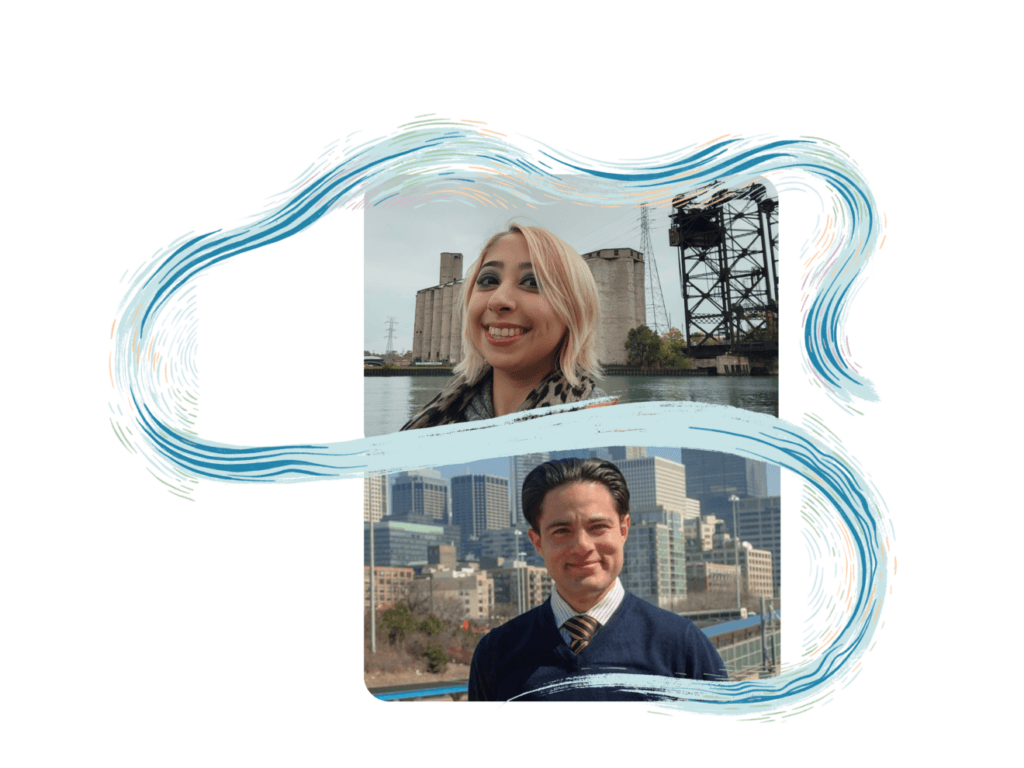
MPC staff Rachel Gaunce and Morgan Murphy met with Yessenia Balcazar (Senior Planning Manager at the Southeast Environmental Task Force (SETF) – pictured left-upper) and Community Development Planner Jack Paul Rocha (pictured left-lower) to discuss the history and future of the Calumet River region and the 100th Street Site.
For generations, the Calumet River has been an industrial corridor that helped build Chicago, while separating nearby residents from the water, from natural spaces, and often from decision-making about their own neighborhoods. Advocates on the Southeast Side like Yessenia and Jack have been pushing for a different future for this area, where the river is recognized not only for its industrial history, but also as a place where residents can gather and connect with nature.
Yessenia, a lifelong Southeast side resident, described the Calumet as “historically a working river that is critical to the development of the city of Chicago.” She shared that the Calumet River “deserves all the respect and consistent homage for having that responsibility in our history” and added, “it’s time now that it gets even more of the respect that it deserves, by actually centering it on relationships with the people that reside near it, not just the companies.” Yessenia expressed that many of the nearby residents strongly desire having a relationship with the Calumet and “reclaiming the river as our own and as a public asset versus one that’s an emblem of industry…I think it deserves that transition.”
The history and legacy of the Calumet is not abstract for residents. Yessenia recalled growing up with petcoke piles, scrap metal facilities, salt piles, and old steel signs as part of the neighborhood backdrop. As a child, she said, those features felt normal. When she began commuting downtown for college and seeing other parts of Chicago, she saw firsthand how communities along working rivers can look dramatically different depending on whose needs are centered. For Yessenia, that realization sharpened a question that animates much of the work happening now: what would it take for the Calumet to become a place where residents see themselves reflected, welcomed, and supported?

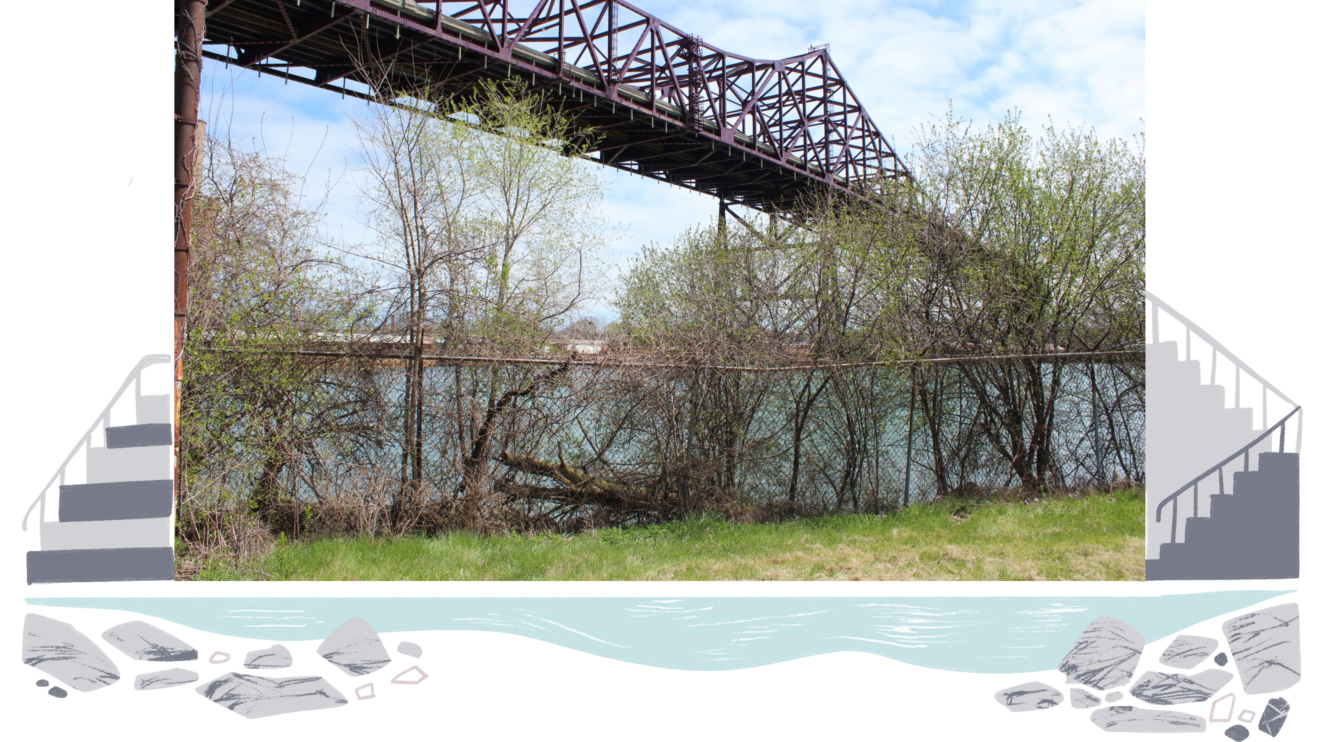
Both Yessenia and Jack emphasized that the progress in the Calumet region has happened because residents and advocacy groups like Calumet Connect have organized and advocated for improvements. Calumet Connect is a local coalition of community and civic stakeholders focused on improving the health and well-being of communities and residents in Southeast Chicago by using community vision to shape the future of the Calumet region. Under the first year of Our Great Rivers funding, Great Cities Institute released Calumet River Communities Planning Framework. This framework led directly to the recent progress and work at the 100th Street Site. Funded as one of the Our Great Rivers projects, the partnership also conducted community engagement and research to create the Calumet Connect Databook, which highlights the environmental and public health challenges in the Calumet Industrial Corridor. This initiative (along with years of organizing efforts by many other community groups and activists) helped inform the HUD investigation that found that “the City of Chicago is violating the civil rights of its residents by relocating polluting businesses from white communities into Black and Latino areas that already are overwhelmed with environmental and health issues.” The agreement settled from the investigation requires the City of Chicago to take actionable steps to protect neighborhoods in the Calumet region that have been burdened by environmental harm. It also led to the creation of City’s Environmental Justice Action Plans.
To build on the momentum fueled by the HUD ruling, SETF and partners are continuing community engagement to expand the network of stakeholders involved in Calumet Connect, so it continues to include local residents, businesses, and other community organizations. The goal is to build on existing community organizing efforts to ensure community members are the ones leading the charge for continued transformation in the region.
The 100th Street Site is one of several Calumet River sites in the process of transformation. The site sits between 96th and 100th Streets along the west bank of the Calumet River and is formerly home to utility production and distribution operations. It is still privately owned by People’s Gas and NRG Energy. Community organizers have been interested in river access there for decades, and project partners have identified the site as an opportunity for riverbank restoration, an accessible trail, and a public viewing area that could connect into a broader network of transportation and recreation infrastructure on the Southeast side.

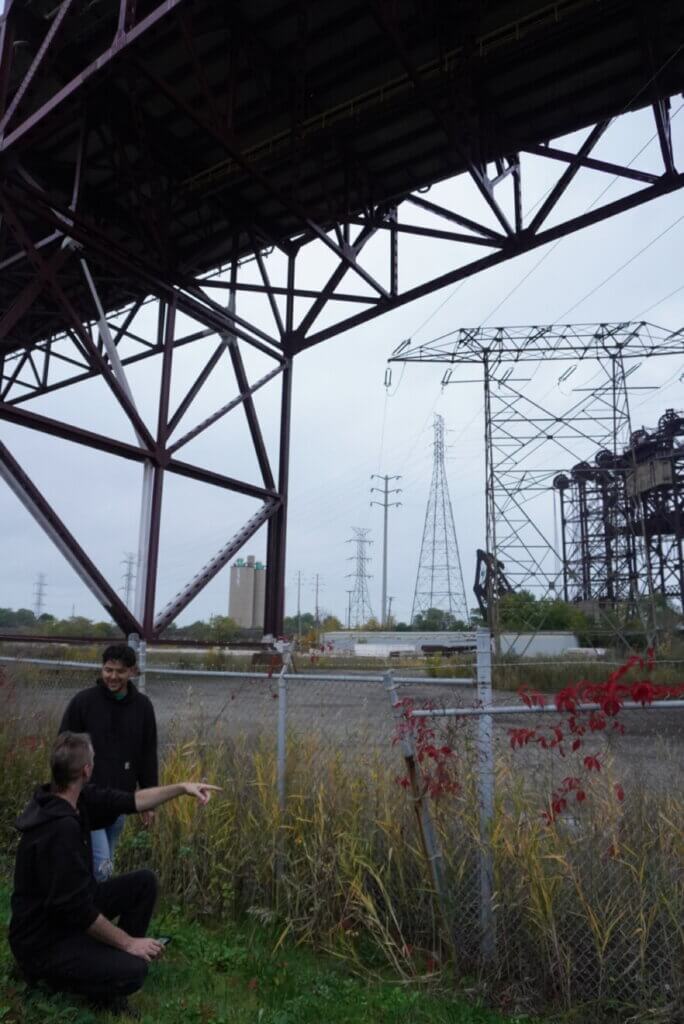
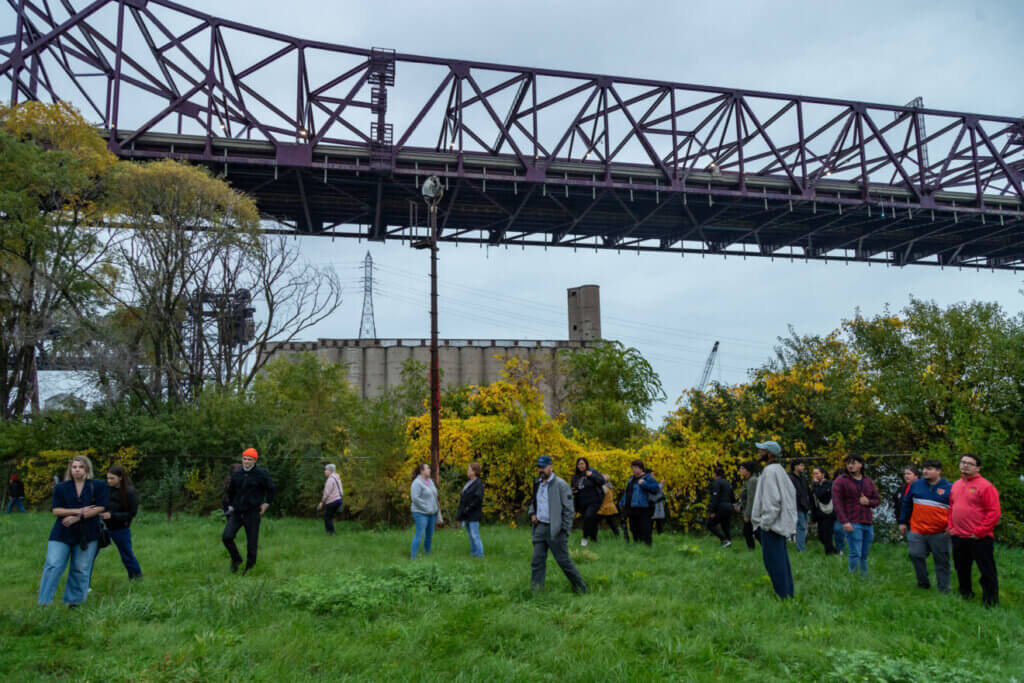
To date, Jack has worked with The University of Illinois Chicago’s Great Cities Institute and Yessenia with SETF to host several activations at the site. At these events, community members participate in a walking tour and share ideas for future uses for the site. Illustrating the response to events at the 100th Street site, Yessenia shared, “there’s a lot of interest in future reuses being centered around green space because it allows for the connectivity of these spaces.” She added, the attendance and perspectives shared at community events at 100th Street are a really an excellent example of that demand and desire… because even back when the 100th Street project was first introduced, those activations have been among SETF’s most popular events, partially because they gave residents the opportunity to physically get on that site, where there are no other access points currently. Along with eagerness and excitement, residents also felt – and feel – other emotions about the site. She shared, “a lot of the time when people, it’s their first time being near the river in that way, and it usually elicits a very emotional response from residents.
Above and left: Community members view the fences that block access to the water at the 100th Street Site. Photo credit: SETF
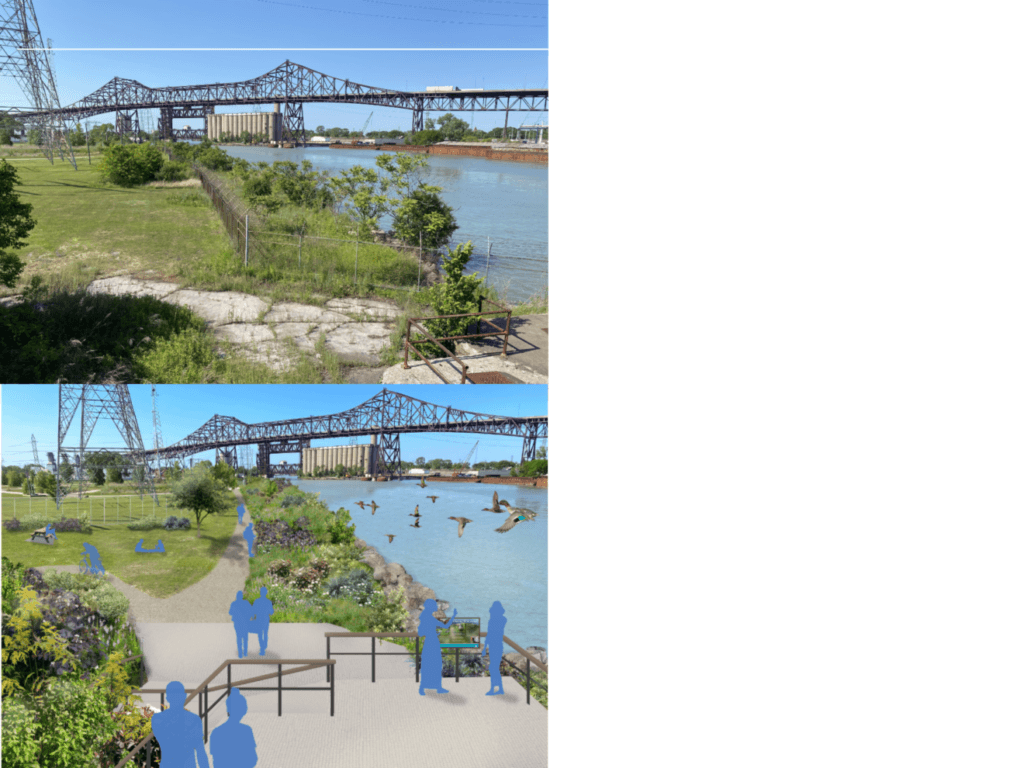
When asked what sites along the Calumet River should become for future generations, both Yessenia and Jack’s responses mirrored the feedback collected from residents and compiled the 100th Street Concept Plan demonstrated in the rendering of the site pictured as a before (top) and after (bottom). Yessenia imagined that these river edge sites would become public spaces for the residents in the immediate area to enjoy. She added that SETF also has a future vision of using these spaces for future programming, while always keeping in mind that they want these to be gathering spaces for residents, including community events. Jack’s vision added an ecological layer. He imagines safer trails and riverfront access paired with native plantings, restored habitat, and opportunities for birds, fish, and other species to return.

Jack emphasized that the project could create one of the only places with public access to the river and that the work is complicated. Community input, ownership, permits, access agreements, and infrastructure all shape the future of what is possible on the site. Jack described the project team’s current focus and shared that the priority has been securing access agreements so that community events and future improvements can happen more easily.
Calumet Connect has already demonstrated the power of community leadership, connection, and action. The tangible results of the coalition’s dedication to the river region, its ecology, and its residents establish a solid foundation that can be built upon in the future of the 100th Street Site. The coalition itself and the community-led 100th Street Site project are invaluable examples of the ways that systems, research, policies, and community action can intertwine for a future where residents can connect with, and shape, their landscapes and well-being.

Explore MPC research and case studies from the other reaches in the Chicago River System below.